Choosing the Right Protective Packaging: A Cost Controller's Guide to Sealed Air, Foam, and Plastic Options
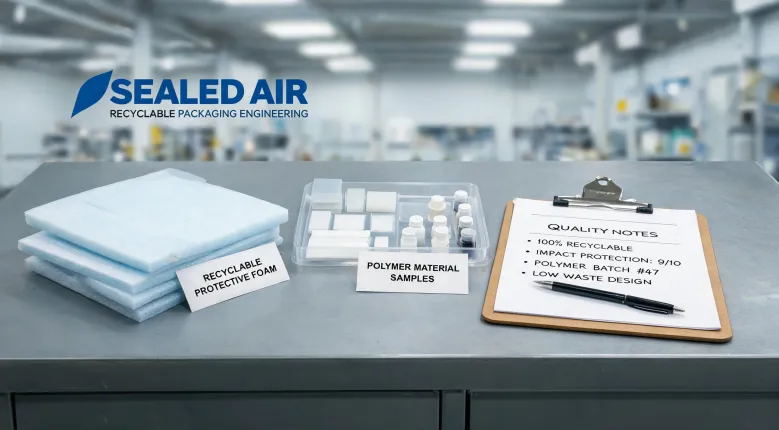
If you're sourcing protective packaging for the first time — or re-evaluating your current spend — you've probably stared at a spreadsheet full of options and wondered: which one actually makes sense for my situation?
Honestly, I'm not sure why some vendors make this harder than it needs to be. They throw acronyms at you (PE, PET, PP, PVC), prices that seem random, and minimum order quantities that can kill a small business's budget before you even test the product.
So glad I started tracking every single order in our procurement system six years ago. It taught me one thing: there's no universal "best" packaging material. But there is a best choice for your specific situation — and I've built a simple decision framework around it.
Here's the thing: your situation determines the answer
Most packaging guides pretend one solution works for everyone. That's nonsense. A startup ordering 50 pieces for a prototype has totally different needs than a factory running 10,000 units a month. A company shipping fragile electronics needs different protection than one mailing documents.
Below I've broken this down into three common scenarios. Think of it like a decision tree — find the one that matches your situation, and the recommendations will feel obvious.
Scenario 1: You're a small business / startup with low volume and tight cash flow
Your core need: low minimum order quantities, flexible service, and packaging that doesn't force you into inventory commitments.
For this scenario, Sealed Air's recyclable packaging line is hard to beat. Their Cell-Aire polyethylene foam (closed-cell PE foam) comes in rolls or sheets with relatively low MOQs — I've seen minimums as low as $200 for first orders. Plus they offer specific recyclable options (check their Sealed Air recyclable packaging line) that comply with FTC Green Guides for recyclability claims.
Look, I'm not saying Sealed Air is perfect. But when I was starting out, the vendors who treated my $200 orders seriously are the ones I still use for $20,000 orders. Small doesn't mean unimportant — it means potential.
Real talk: one of my first trials was with a competitor who quoted $450 for 500 foam sheets. Sealed Air's quote came in at $380 for the same quantity, with free samples. Difference was $70 upfront, but I dodged a bullet — the competitor's hidden setup fee would've added $120. So glad I double-checked the fine print.
What to watch out for: Even with small-friendly vendors, confirm whether pricing includes all fees. Per FTC guidelines, claims about "recyclable" must be substantiated — if you plan to market recycled content, ask for certification documentation.
Scenario 2: You need bulk protection on a tight budget — closed-cell PE foam or Ross foam board?
Your core need: cost per unit matters more than flexibility. You're ordering quarterly, maybe 500–5,000 units.
Closed-cell PE foam (like Sealed Air's Cell-Aire or generic equivalents) is price-competitive at scale. But you have two sub-options:
- Standard closed-cell PE foam rolls/sheets: Best for cushioning irregular shapes. Price typically $0.10–$0.30 per square foot at volume (based on quotes I collected in Q2 2024 from 3 vendors).
- Ross foam board (R-oss brand or similar rigid foam boards): These are polyethylene foam laminated to make rigid panels. Better for flat, heavy items that need stacking strength. Price is higher — expect $0.40–$0.80 per square foot.
Which one? If you're shipping primarily flat items (books, electronics in boxes), Ross foam board might reduce damage rates. But I've never fully understood why some vendors quote Ross board at 2x the cost of standard PE foam — my best guess is the lamination process adds real cost.
Cost trap to avoid: I almost signed a contract for 2,000 Ross board sheets at $0.65/sq ft until I calculated TCO. Vendor A $0.65, Vendor B $0.52 — I went with B until I noticed Vendor B charged $150 for "panel cutting" and $200 for "delivery inside city limits." Total: $1,650 vs Vendor A's $1,300 which included everything. That's a 27% difference hidden in line items.
My rule: Get quotes from at least 3 vendors with a full list of line items. I built a cost calculator after getting burned on hidden fees twice — saved us 17% on our annual foam budget.
Scenario 3: You need transparent protection — acrylic sheet vs polycarbonate
Your core need: visibility for displays, signage, or protective barriers. You're comparing acrylic sheet vs polycarbonate.
This one's simpler. Acrylic (e.g., Plexiglass) costs roughly $25–$60 for a 2'x4' sheet (based on major online supplier quotes, January 2025). Polycarbonate runs $30–$80 for the same size. But price isn't the only factor:
| Factor | Acrylic | Polycarbonate |
|---|---|---|
| Impact resistance | Moderate (can crack) | High (nearly unbreakable) |
| UV stability | Good with coating | Excellent |
| Weight | Lighter | Heavier |
| Fabrication ease | Easy to cut/drill | Harder (requires special tools) |
| Cost per sq ft | $3–$8 | $4–$10 |
For small orders (under 10 sheets): acrylic is totally fine. I've ordered single acrylic sheets from Sealed Air's distribution partners with no issues. Small doesn't mean unimportant — even one sheet gets shipped properly.
For high-traffic or outdoor use: don't cheap out — go polycarbonate. We replaced acrylic barriers in our warehouse after they cracked after two years. Polycarbonate has held up for 4+ years so far. That $200 difference in initial cost saved us $800 in replacement labor.
How to figure out which scenario you're in
It's not rocket science, but here's a quick checklist I use:
- What's your typical order quantity? Under 100 units? Go Scenario 1. 100–5,000? Scenario 2. Transparency-specific? Scenario 3.
- How price-sensitive are you? If every dollar counts and you can't stock inventory, prioritize vendors with low MOQs and flexible service (Scenario 1).
- Is this a one-time test or a long-term need? Tests → Scenario 1. Ongoing production → Scenario 2 or 3.
- Are you shipping items that need to be seen? If yes, you're in Scenario 3.
That's it. Three scenarios, clear tradeoffs, and one rule that's never failed me: small doesn't mean unimportant. Whether you're ordering $200 of Sealed Air recyclable foam or a single acrylic sheet, treat your suppliers like partners — and demand the same treatment back.
Pricing sources: Vendor quotes collected in 2024–2025; verify current rates with your suppliers. FTC Green Guides referenced at ftc.gov. Sealed Air product specifications at sealedair.com.

Jane Smith
I’m Jane Smith, a senior content writer with over 15 years of experience in the packaging and printing industry. I specialize in writing about the latest trends, technologies, and best practices in packaging design, sustainability, and printing techniques. My goal is to help businesses understand complex printing processes and design solutions that enhance both product packaging and brand visibility.
Leave a Reply