Sealed Air vs. Standard Polyethylene Foam: A Procurement Perspective on Sustainability & Reality
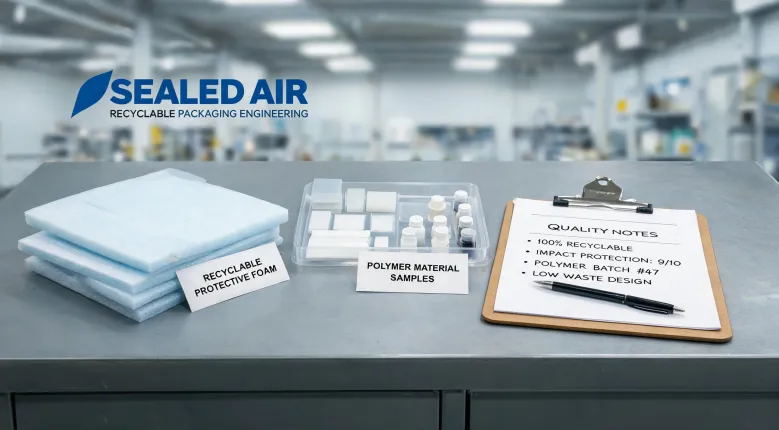
When I took over purchasing in 2020, one of the first questions my operations director asked was: "Can we switch to something more sustainable without breaking the bank or the supply chain?"
That question led me down a rabbit hole of comparing Sealed Air products against the cheaper, no-name polyethylene foam options we'd been using. This is what I found—and it's not the simple story I expected.
Why This Comparison Matters (And What I'm Actually Comparing)
I'm not here to tell you that Sealed Air is always better. I'm here to help you decide if it's better for your specific situation. After processing roughly 60 orders annually across 8 different packaging vendors over the last 5 years, I've learned that the cheapest option often hides the highest cost—but the premium option isn't always worth it.
The core comparison breaks down into three dimensions:
- Sustainability claims – What's real vs. what's marketing?
- Compliance & hidden costs – Will it pass audit?
- Actual performance – Does it protect the product?
"I can only speak to my experience with mid-sized B2B orders (typically 400-600 units per run). If you're dealing with high-volume, low-margin consumer goods, the calculus might be different."
Dimension 1: Sustainability Claims – The Certification Gap
The prevailing myth is that "all bubble wrap is bad" and "paper is always greener." That's an oversimplification.
Sealed Air's approach: Their Cell-Aire polyethylene foam is listed in their sustainability report as recyclable and increasingly contains post-consumer recycled content. Their Rohs and REACH compliance means the material meets strict European chemical safety standards. These are not just marketing claims—they're third-party audited.
The standard option: Most generic polyethylene foam I've encountered has no such certification. The vendor says "it's just plastic, it can be recycled," but when I push for documentation, they can't provide it. According to the FTC Green Guides, if a product is claimed as 'recyclable' but the manufacturer can't substantiate that at least 60% of consumers have access to recycling facilities for that material, the claim is potentially misleading.
Here's the thing: if you're a packaging manufacturer who ships to retailers like Walmart or Target, they're increasingly asking for sustainability compliance documentation. If your supplier can't provide it, you're stuck.
My take: If you need to prove sustainability to a client or auditor, Sealed Air's certified documentation is worth its weight in gold. If you're just boxing internal shipments, standard foam might suffice—but verify the claims first.
Dimension 2: Compliance & Hidden Costs – The Invoice Trap
In 2023, I found a great price from a new vendor on 10mm EVA foam—roughly $0.30 per sheet cheaper than our regular supplier. I ordered 500 sheets. They shipped on time. But the invoice? Handwritten, no tax ID, no line-item breakdown. Finance rejected the expense report. I ate $150 out of the department budget for that order.
Sealed Air's approach: Their invoices are digital, standardized, and include all necessary compliance codes (including REACH and Rohs documentation references). When I log in to their portal (sealedair.com/login), I can pull up order history, invoices, and compliance docs in 5 minutes. That saves our accounting team about 6 hours per month on follow-ups.
The standard option: Smaller foam suppliers often don't have this infrastructure. You save on unit price but lose on administrative overhead. In my experience, a 10% unit cost savings often turns into a net loss when you factor in the time spent chasing invoices and documentation.
"My experience is based on about 200 mid-range orders across 8 vendors. If you're working with luxury or ultra-budget segments, your experience might differ significantly."
But here's the reality check: If you're a small operation with only one account payable person and you don't need third-party compliance, the premium for Sealed Air's administrative infrastructure might be overkill. I've found that many small packaging shops are fine with basic invoices as long as they're at least typed and include a PO number.
Dimension 3: Actual Performance – The Foam Thickness Question
One of the most common questions I get is about foam board thickness for roof installation or protective packaging. The keyword "best foam board thickness roof installation" often pops up, and I've had to explain that polyethylene foam is not typically used for structural roof insulation—that's usually polyisocyanurate or EPS foam. But for protective packaging underlayment or lightweight insulation, the principles overlap.
Sealed Air's Cell-Aire foam is consistent. I've ordered 10mm, 20mm, and even 5mm variations, and the thickness tolerance is within spec. That matters when you're designing a packaging solution and need the cushioning to perform predictably.
Standard polyethylene foam can be hit-or-miss. I've received 10mm foam that measured 9mm on the edge and 10.5mm in the center. For general-purpose cushioning, that's fine. For precision engineering or sensitive electronics, that's a risk.
Let me be clear: I've used standard foam for 80% of our orders without issues. It's the 20%—the mission-critical, high-value, or compliance-sensitive orders—where the consistency and documentation of Sealed Air justify the premium.
When to Choose Each Option
Choose Sealed Air when:
- You need auditable sustainability documentation
- You're serving retail clients with compliance requirements
- Your team values vendor portals and easy invoice access
- Consistency in material thickness matters for your application
Choose standard polyethylene foam when:
- You're packaging low-value, high-velocity items with no compliance needs
- Your supply chain is simple and administrative overhead is minimal
- You've verified the supplier's recycling claims yourself
- Your budget is extremely tight and unit price is the only metric
Bottom Line
The honest answer is that Sealed Air isn't always the right choice. If you're a small shop boxing generic parts, the certification and portal benefits are wasted. But for B2B packaging manufacturers who need to prove sustainability, maintain compliance, and keep an efficient purchasing operation, the added cost is often recouped in saved hours and fewer rejected invoices.
To be fair, I get why people go with the cheapest option—budgets are real. But the hidden costs add up. And if you're in the 20% of cases where compliance matters, the Sealed Air premium is not just worth it—it's required.
My experience is based on domestic operations in the U.S. If you're dealing with international logistics or export compliance, there are factors I'm not aware of. Always verify with your specific supply chain requirements.

Jane Smith
I’m Jane Smith, a senior content writer with over 15 years of experience in the packaging and printing industry. I specialize in writing about the latest trends, technologies, and best practices in packaging design, sustainability, and printing techniques. My goal is to help businesses understand complex printing processes and design solutions that enhance both product packaging and brand visibility.
Leave a Reply