How I Learned That 'Plastic Free' Packaging Can Be a $3,200 Mistake
-
The Project That Started It All
-
The First Red Flag (That I Ignored)
-
The Turning Point: A Conversation About What 'Recyclable' Actually Means
- The Second Mistake: Assuming All Plastics Are the Same
-
The Glossy Foam Board Incident
- The Checklist I Now Use (To Prevent You From Repeating My Errors)
-
Here’s What I Wish Someone Had Told Me in 2022
The Project That Started It All
Back in early 2022, I was handling packaging procurement for a mid-sized electronics distributor. We shipped fragile sensor modules—each unit worth about $400. Our client, a sustainability-focused retailer, sent us a new requirement: “We want plastic-free packaging for all incoming shipments.”
I’ll be honest: at the time, I thought it was a no-brainer. Plastics = bad, paper = good, right? I’d read all the headlines, seen the zero-waste influencers on LinkedIn. So I jumped straight into sourcing corrugated dividers, kraft paper wraps, and molded pulp inserts. The first order was for 500 units—a $3,200 order, as I recall.
The First Red Flag (That I Ignored)
When the first batch of tray prototypes arrived, the engineer on our line said, “These pulps are gonna crumble under vibration.” I waved it off. “It’s what the customer wants. We’ll test it.”
We did a drop test—standard ISTA 1A. Damage rate: 18%. Our previous polyethylene foam (Sealed Air’s Cell-Aire) gave us <1% damage. But hey, we were being green, so I rationalized: the client will accept some breakage for the environment. (Ugh. I wish I could go back and slap myself.)
The first shipment went out in March 2022. Ten days later, the retailer emailed photos of crushed sensors. “Replace or refund.” That $3,200 order became $3,200 in replacements plus $890 in expedited shipping (note to self: never ignore the engineer again).
The Turning Point: A Conversation About What 'Recyclable' Actually Means
I called the supplier—a small company that boasted “certified compostable packaging.” Their rep said, “Don’t worry, it breaks down in industrial compost.” I asked, “But does it protect during shipping?” Long silence. Then he admitted their own testing showed 15-20% damage rates for items over 2 pounds.
I realised I’d fallen into a classic trap: I was so focused on the environmental label that I forgot the primary job of packaging—protecting the product. A destroyed product that needs to be remanufactured is infinitely worse for the planet than a piece of plastic that can be recycled.
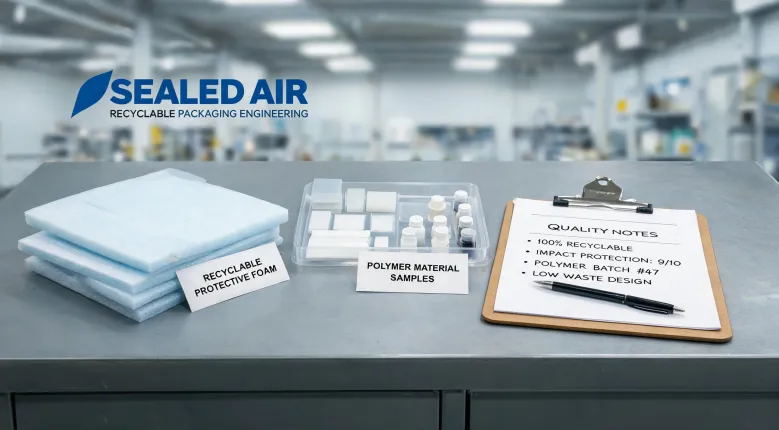
That’s when I reached out to Sealed Air (yes, the same company I’d dismissed as “just plastic”). Their technical rep patiently walked me through the difference between their recyclable polyethylene foam and the paper alternatives. “Our Cell-Aire is 100% recyclable through store-drop-off programs,” he said. “It’s not biodegradable, but it’s reusable and recyclable. More importantly, it actually works.”
The Second Mistake: Assuming All Plastics Are the Same
But here’s where my lack of materials science knowledge bit me again. A few months later, a different client asked about how to clean HDPE plastic sheets they were using for returnable packaging. They’d tried acetone and ended up with a cloudy, cracked surface.
I thought, “It’s plastic, just use any cleaner, right?” Wrong. I called our Sealed Air contact again (this time I’d learned to ask experts). He told me: “I’m not a chemist, so I can’t speak to all solvents, but from a packaging perspective, HDPE shouldn’t be cleaned with strong solvents. Mild soap and water, or isopropyl alcohol at most.”
That was my second “duh” moment. The client’s $1,500 worth of HDPE sheets were ruined because neither they nor I knew the basic care requirements.
What I Now Tell Every Customer About HDPE Cleaning
If you’re working with clear HDPE sheets (often used as dividers or dust covers):
- Use warm water + mild dish soap
- Soft microfiber cloth only
- Avoid ammonia, bleach, and acetone
- Rinse thoroughly—residue attracts dust
That’s it. Anything stronger will cause crazing (micro-cracks) that weaken the plastic over time.
(I now keep that printed in my binder. Because apparently, common sense isn’t common until you’ve paid for it.)
The Glossy Foam Board Incident
Another lesson came when a marketing team ordered glossy foam board for a trade show display. They wanted “eco-friendly” so they chose a paper-coated board. Three days before the show, the boards arrived warped—the glossy coating didn’t bond well with the recycled core. They had to reprint on standard foamboard (which actually is polystyrene-based).
The irony? The “eco” option generated more waste than the standard one.
The Checklist I Now Use (To Prevent You From Repeating My Errors)
After the third rejection (Q1 2024), I created a pre-purchase checklist that I run with every packaging/material order. It’s saved us from at least 10 bad decisions so far.
My Personal 4-Question Test
- Primary function: Does this material protect/serve its intended use? (Don’t optimize for sustainability first.)
- End-of-life truth: Can this material actually be recycled in the customer’s region? Check local facilities, not just the label.
- Hidden costs: Added shipping weight? Higher damage rates? Increased labor?
- Expert sanity check: Ask someone who works with this material daily—not the sales brochure.
Here’s What I Wish Someone Had Told Me in 2022
“Plastic-free” doesn’t automatically mean better for the environment. A polyethylene foam package that gets reused twice and then recycled is often greener than a single-use paper box that ends up in a landfill. The FTC Green Guides actually warn against vague claims like “plastic-free” if they imply environmental superiority. Per FTC, you need substantiation (16 CFR Part 260).
Also: know your material’s boundaries. HDPE is tough, but it has chemical limits. Polyethylene foam is recyclable, but not at curbside—you need a store drop-off (check usps.com for mail-back options? Not exactly—but many retail chains collect plastic bags/films).
I’m not a materials scientist, so I can’t speak to every polymer. What I can tell you from a procurement perspective is: ask the dumb questions before you sign the PO. Because after that, the mistakes come out of your budget.
Now I maintain our team’s material checklist. And when someone says “we need plastic-free packaging,” I ask: “What’s the goal? Reducing waste, or feeling good?” If they say the second, I show them this story.
As of March 2025, we still use Sealed Air’s Cell-Aire for 80% of our fragile shipments. It’s recyclable, it works, and our carbon footprint per shipped product is actually lower than it was with paper. Go figure.

Jane Smith
I’m Jane Smith, a senior content writer with over 15 years of experience in the packaging and printing industry. I specialize in writing about the latest trends, technologies, and best practices in packaging design, sustainability, and printing techniques. My goal is to help businesses understand complex printing processes and design solutions that enhance both product packaging and brand visibility.
Leave a Reply