I Spec'd the Wrong Foam Board for a Client Order (And Why You Shouldn't Assume 'HDPE' Means What You Think)
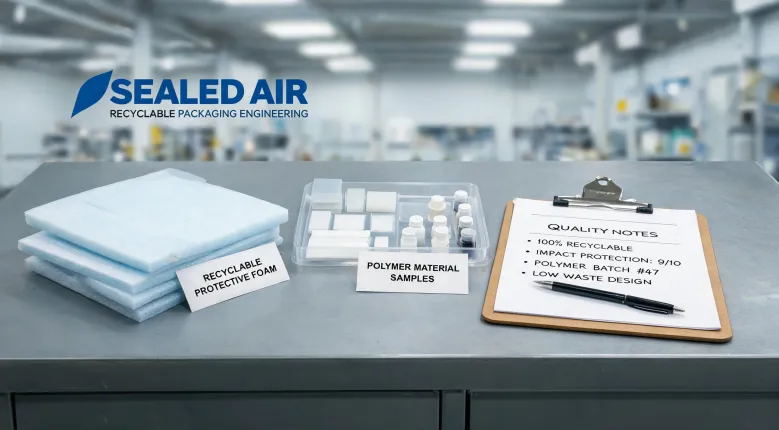
Let me start with a confession that still makes me wince. In early 2023, I submitted a purchase order for what I thought was a straightforward request: 250 units of a 1/4 inch foam board, specified as HDPE (high-density polyethylene). I'd seen the Sealed Air logo on a similar product we'd used before, so I thought, 'Great, I'll just order the same spec, but with a tighter tolerance on thickness.'
The order came back. Every single piece was wrong.
Not just a little wrong—we're talking about a $2,800 order of protective packaging that had to be re-ordered at rush pricing. The client was furious. We lost a week of production schedule. And the worst part? The mistake was entirely my own. Not because the supplier was bad, but because I had completely misunderstood what 'HDPE' meant in the context of polyethylene foam.
This is the story of that failure, and the checklist I now use to prevent anyone on my team from repeating it.
The Surface Problem: A Simple Spec Request
On the surface, the issue looked like a simple miscommunication. I asked for 'HDPE foam board, 1/4 inch thickness, high-density.' The supplier delivered a product that met my written spec, but it didn't work for our application—it was too rigid, lacked the required compression resistance for the delicate electronic components we were packaging, and the surface finish was completely wrong for the adhesive we planned to use.
My immediate thought was: 'The supplier sent the wrong thing.' But when I looked at the material data sheet (MDS), the numbers matched. They had sent exactly what I ordered. The problem wasn't the supplier's execution; it was my specification.
I'd fallen into the classic trap of assuming a material category is a material specification.
What I learned: A request for 'HDPE foam' or '1/4 foam board' is not a specification. It's a wish. The real spec lives in the tolerance, the density (measured in kg/m³ or lb/ft³), and the specific product grade, not just the base polymer type.
The Deep Root Cause: Why 'HDPE' is a Trap
Here's where I made my biggest intellectual error. I assumed that because I knew 'HDPE' was a common polymer for plastic packaging, it gave me a clear picture of the material's properties. It didn't. Here's the reality:
1. 'HDPE' describes the polymer family, not the foam product. Polyethylene can be processed into dozens of different foam types. A cross-linked polyethylene foam (like Sealed Air's Cell-Aire or Ethafoam) behaves completely differently than a non-cross-linked sheet. The former is a closed-cell, fine-bubble foam used for cushioning. The latter (which I ordered) is more of a rigid board—great for insulation, terrible for shock absorption.
2. Density is the real spec. I asked for 'high-density' foam. But what does that mean? In polyethylene foams, density ranges from about 1.5 lb/ft³ (very soft) to 6 lb/ft³ or more (very rigid). My supplier's 'high-density' was 4.5 lb/ft³. What I actually needed (I later learned) was around 2.2 lb/ft³ for the delicate electronics. No one told me because I didn't ask.
3. The '1/4 inch' tolerance matters. I specified 0.25 inches. The supplier delivered boards averaging 0.27 inches, with a tolerance of +-0.03 inches. That 16% thickness variation is normal for many foam board products, but for our 0.25-inch design dimensions, it was a complete failure. The parts no longer fit the mounting brackets.
In retrospect, I was treating a material code like a model number. It's not. 'HDPE' is just the starting point, not the destination.
The Cost of My Mistake (Quantified)
Let me put some hard numbers on this disaster, because I think it's the only way to learn from it:
- Order value wasted: $2,800 for 250 units of 1/4 foam board. Straight to scrap.
- Rush re-order cost: $1,150 for the correct material (Sealed Air Ethafoam 220, 2.2 lb/ft³) with expedited shipping.
- Production delay: 10 working days. We had to halt assembly on that product line while we waited for the correct foam.
- Client compensation: We had to give a $500 credit on the order to keep the account.
- Team morale hit: Three people spent an entire afternoon trying to figure out if we could salvage any of the material. We couldn't.
Total cost of that 'simple HDPE order': roughly $4,450, plus a damaged reputation with a client we'd been courting for months. And it was all because of my assumption that 'HDPE' plus 'foam board' was enough to specify a product.
(Note to self: That $4,450 number still hurts. I should have known better.)
The Fix: A Pre-Order Checklist Built on Mistakes
After that failure, I created a pre-order verification checklist for foam board purchases. It's not complicated, but it's saved us roughly $12,000 in potential repeat errors over the past two years. Here's what we now check:
Step 1: Identify the product series, not just the polymer. Instead of asking for '1/4 foam board HDPE,' I now ask: 'Is this Sealed Air Ethafoam 220, or a cross-linked PE foam like Cell-Aire?' The brand and product series matter because they define the processing method and properties.
Step 2: Specify the density window. We always add a density requirement to the PO. For cushioning, we require 1.8-2.5 lb/ft³. For structural support (which I mistakenly needed), we specify above 4.0 lb/ft³. Never leave density to interpretation.
Step 3: Discuss the tolerance for thickness. A 0.25-inch board can vary from 0.22 to 0.28 inches depending on manufacturing process. We now add a tolerance clause: 'Thickness: 0.25 inches +- 0.005 inches.' That's a tighter tolerance, and yes, it costs a bit more—but it's cheaper than the alternative.
Step 4: Ask about compliance certifications (before ordering). We needed RoHS compliance for our client's European market. I didn't check. The first (wrong) material didn't have it. The second (correct) one did. A five-minute email to the supplier would have saved a week. Now, we always include a compliance clause in our RFQ.
Step 5: Get a sample sent, and test it. I don't care how close the spec looks on paper—if the application is critical, we order a small sample first. The $30 in shipping for a 12x12 inch sample board has saved us from at least 3 major disasters.
This checklist seems obvious now. But before my $4,450 mistake, I wouldn't have thought it necessary.
A Final Note: Trust, But Verify (Your Own Knowledge)
The most humbling part of this experience was realizing that my confidence—'I know what HDPE is, I've been doing this for years'—was the exact thing that caused the failure. I wasn't ignorant; I was overconfident.
I don't have hard data on how many procurement errors come from material misinterpretation vs. supplier errors, but based on my own errors and conversations with colleagues, I'd estimate it's at least 30% of supply chain hiccups. Maybe higher. The industry changes fast, especially with new 'sustainable' and 'plastic-free' alternatives (which is a whole other minefield).
So, if you're ordering foam board or any specialty plastic sheet product, take a moment to ask yourself: Do I really understand what '1/4 inch HDPE foam board' means to the supplier? Because I promise you, the answer might surprise you. And verifying it upfront beats paying for the lesson later.

Jane Smith
I’m Jane Smith, a senior content writer with over 15 years of experience in the packaging and printing industry. I specialize in writing about the latest trends, technologies, and best practices in packaging design, sustainability, and printing techniques. My goal is to help businesses understand complex printing processes and design solutions that enhance both product packaging and brand visibility.
Leave a Reply