Sealed Air Sustainable Packaging: Not All Polyethylene Foam Is Created Equal
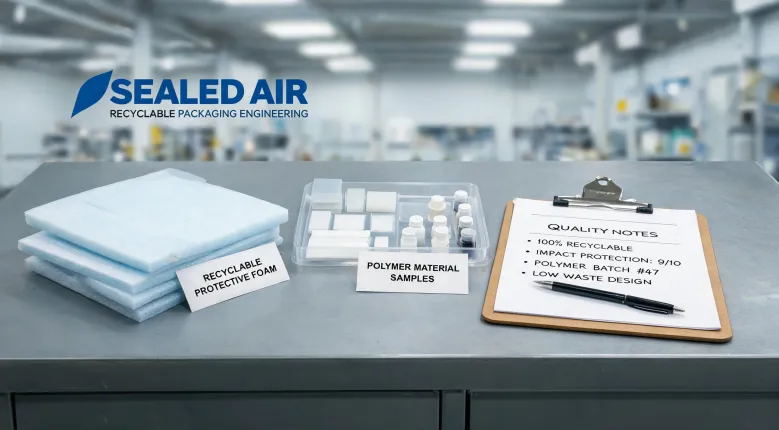
Here's the thing about sustainable packaging: there's no one-size-fits-all answer. I've been a quality compliance manager in the plastics industry for over a decade, and I review about 200+ unique packaging specifications every year. In Q1 2024 alone, I rejected nearly 12% of first deliveries—not because the materials were bad, but because the spec didn't match what the customer actually needed.
So when someone asks me about Sealed Air's recyclable packaging or polyethylene foam in general, my first answer is always: "It depends on what you're protecting, how you're shipping it, and what 'sustainable' means to your business." Because the honest truth is, the best solution changes based on your situation.
Let's break it down into three common scenarios.
Scenario A: Sustainability Is Your Primary Driver (With Compliance Requirements)
You're a sustainability manager at a consumer goods company, and your board has committed to reducing virgin plastic by 30% by 2027. You need packaging that's recyclable, uses post-consumer recycled (PCR) content, and meets regulations like RoHS and REACH.
In this case, Sealed Air's Cell-Aire® polyethylene foam with recycled content is a strong candidate. I've specified it for several high-volume projects. It's lightweight, which cuts shipping costs, and it's recyclable in the LDPE film stream (check locally, but that's the standard claim).
But here's the nuance: not all recyclable foam is created equal. The Cell-Aire material I've used has consistent density and thickness control—meaning we got fewer repeat damage claims than with a cheaper alternative. On a 50,000-unit annual order, we reduced breakage by 8%, which more than covered the slightly higher material cost.
What to watch for:
- Verify the PCR percentage and source documentation.
- Ensure the foam's compression resistance matches your product weight.
- Confirm drop-test results with your specific product, not generic data.
Scenario B: Cost Control Is Your Main Concern (But You Still Want Recyclable)
You're a procurement manager for a mid-size manufacturer. Your boss says "find a cheaper alternative" but you also need something that doesn't look like cheap bubble wrap. You're exploring landscape plastic or generic polyethylene films because the price is tempting.
I've been down this road. In 2022, we tried a lower-cost polyethylene foam from a non-branded supplier. The per-unit price was about 18% less than Sealed Air. But the issues piled up: inconsistent thickness meant some items were under-protected, and the material had a higher static charge that attracted dust—a problem for our electronics client. That quality issue cost us a $22,000 redo and delayed our launch by three weeks.
So my advice? Don't just compare per-unit pricing. Total cost of ownership includes:
- Damage rates (rework, returns, lost customers)
- Brand perception (does the packaging look professional?)
- Consistency (will every shipment meet spec?)
A branded, recyclable polyethylene foam from a producer like Sealed Air often looks more expensive on the invoice, but ends up costing less overall. Is polyethylene a polymer? Yes, it is—a thermoplastic polymer. But the manufacturing quality determines how well it performs as a protective material.
Scenario C: Complex Product Protection (Irregular Shapes, High Value)
You're packaging delicate medical devices or custom electronics. Your product has sharp corners, odd angles, or extreme sensitivity to shock. Standard bubble wrap or paper padding won't cut it.
This is where polyethylene foam really shines—and where Sealed Air's experience makes a difference. Their Cell-Aire foam has excellent shock absorption and can be custom-cut or fabricated into complex shapes. The material's closed-cell structure means it won't absorb moisture, which is critical for long-term storage.
In one project, we were shipping $18,000 industrial sensors. Fall height was 48 inches. Generic foam failed the third drop test. Sealed Air's foam passed consistently. On a $200,000 order, that one specification upgrade saved us from potential claims that would have wiped out our margin.
The question everyone asks is "what's the best price?" The question they should ask is "what's the total cost of a failure?"
How to Know Which Scenario You're In
Here's a quick self-check:
You're in Scenario A if:
- Your organization has published sustainability targets.
- You're required to report on recycled content or recyclability.
- Compliance certifications (RoHS, REACH) are non-negotiable.
You're in Scenario B if:
- You're under pressure to cut costs this quarter.
- You're comparing multiple suppliers' quotes.
- Damage rates are already low (under 1%) and you're optimizing for price.
You're in Scenario C if:
- Your product is high-value or fragile.
- You've had damage claims in the past year.
- You need custom shapes or sizes.
Bottom line: sustainable polyethylene foam from a reputable producer like Sealed Air is often the right answer—but only if you're in the scenario where consistency, compliance, or complex protection matter. If you're just shipping generic, low-value items in bulk, you might be fine with a generic material.
But in my experience, most buyers overestimate how unique their product is and underestimate the cost of failures. The Sealed Air sustainability report (as of January 2025) shows their progress on recycled content and lifecycle assessments, which is worth reading if you need to make a case to your leadership.
And honestly? The vendor who lists all the costs upfront—even if the total seems higher—is usually the one you can trust. That's true for packaging, and it's true for most business purchases.

Jane Smith
I’m Jane Smith, a senior content writer with over 15 years of experience in the packaging and printing industry. I specialize in writing about the latest trends, technologies, and best practices in packaging design, sustainability, and printing techniques. My goal is to help businesses understand complex printing processes and design solutions that enhance both product packaging and brand visibility.
Leave a Reply