Why I Stopped Chasing the Lowest Price on Sealed Air Products (and You Should Too)
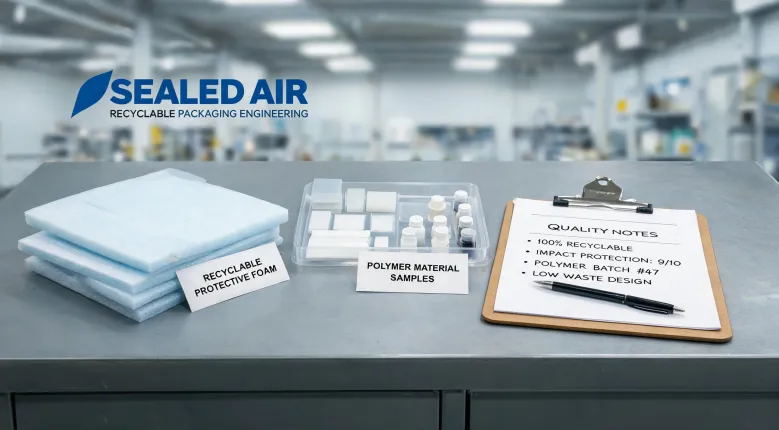
If you are sourcing Sealed Air products for a deadline, ignore the cheapest quote.
I used to think my job was simple: find the lowest price for the materials we need. For three years, that is how I operated. Then, in March 2024, we needed a rush order of Cell-Aire polyethylene foam for a product launch. The cheapest vendor was $460 less than our usual supplier. They said delivery was “estimated” in 7-10 business days. They missed the deadline by six days. That $460 “savings” cost us roughly $15,000 in delayed product shipment and overtime labor. The cost of uncertainty almost always exceeds the premium for guaranteed delivery.
This isn't about price being irrelevant. It's about understanding that total cost of ownership includes far more than the unit price. It includes your time, your team's time, the risk of missed deadlines, and the cost of materials that don't arrive as specified.
How I Learned This Lesson the Hard Way
When I first started managing vendor relationships, I assumed the lowest quote was the best choice. I'd look at three bids, pick the cheapest, and move on. Three budget overruns later—including one where a vendor couldn't provide proper invoicing and cost us $2,400 in rejected expense reports—I realized I'd been measuring the wrong thing.
In 2022, during our vendor consolidation project, I mapped out all the hidden costs I'd encountered. The list was longer than I expected:
- Invoicing compliance: Vendors without proper systems cost us accounting time. That time is real money—roughly $35 per hour for our team.
- Specification mismatches: I once ordered “standard thickness” foam. The vendor's standard was different from ours. The material was unusable.
- Communication breakdowns: I said “as soon as possible.” They heard “whenever convenient.” Result: delivery two weeks later than I expected.
- Rush fees: Low-cost vendors rarely have rush capacity. When we needed speed, they couldn't deliver—and we had to pay even more to source elsewhere.
After that analysis, I shifted my approach. Now, I evaluate three factors in order: delivery certainty, compliance capability, and then price. The cheapest supplier only wins if they also pass the first two tests.
The Real Cost of “Estimated” Delivery
In our company, we process roughly 60-80 orders annually for packaging materials spread across three locations. That includes everything from standard bubble wrap to specialized foam inserts for fragile equipment. When you're managing that volume, an “estimated” date becomes a liability.
I'd argue that the value of guaranteed turnaround isn't the speed—it's the certainty. For event materials or product launches, knowing your deadline will be met is often worth more than a lower price with a vague promise. Since we switched to vendors who provide firm delivery dates and stick to them, our emergency reorder rate has dropped by about 40%.
But here's the nuance I didn't expect: not all “guarantees” are equal. Some vendors use the word lightly. I've learned to ask specific questions:
- What happens if the order doesn't arrive on your guaranteed date?
- Do you have a written policy on missed deadlines?
- Can you provide a tracking number at time of shipment?
If the answer to any of these is vague or avoidant, that's a red flag. Even the best pricing isn't worth the headache of an unreliable delivery.
What About Sustainability Compliance?
One area where I see buyers trip up is assuming that “sustainable” and “recyclable” packaging means cheap or standard. From my perspective, that's a dangerous shortcut. We're required to meet RoHS and REACH compliance for our customers in the medical device sector. Not all foam materials carry those certifications. If a vendor can't provide compliance documentation upfront, we don't order—regardless of the price.
I've also noticed a growing number of suppliers claiming their packaging is “100% plastic-free” or “fully biodegradable.” But if their core product is a plastic-based material like polyethylene foam, those claims don't hold up under scrutiny. I now verify certifications before placing any order. Sustainability claims without documentation are just marketing—and marketing doesn't pass a compliance audit.
When It Makes Sense to Choose the Cheaper Option
I don't want to give the impression that you should always pay more. There are situations where a lower-cost vendor is the right call:
- Internal projects with no deadline: If you're ordering materials for a project that has no external deadline, the risk of delay is much lower.
- Stock items you can reorder easily: If you already have inventory and this is a replenishment order, price becomes more important than speed.
- Vendors you've vetted thoroughly: A smaller, less expensive vendor can be a great partner if they've proven themselves. The first order is always the riskiest.
The key is knowing which situation you're in. I keep a spreadsheet that flags orders as “deadline-critical” or “flexible.” Everything in the first category gets the premium vendor. Everything else gets a competitive bid.
The Bottom Line on My Change in Thinking
When I first started managing these relationships, I thought the lowest price was always the right answer. I was wrong. Three years of experience—and several expensive mistakes—taught me that the total cost of a purchase includes the cost of uncertainty. That missed deadline? It cost us $15,000. The vendor who couldn't invoice properly? $2,400 in rejected expenses. The wrong foam thickness that we couldn't return? Wasted $800 and three weeks of project time.
I'm not saying you should ignore budget. I'm saying that when you factor in the real risks—late delivery, compliance failures, communication breakdowns—the premium vendor is often the cheaper choice in the long run. And in my role, where I have to justify every decision to both operations and finance, that's a calculation I'm comfortable defending.

Jane Smith
I’m Jane Smith, a senior content writer with over 15 years of experience in the packaging and printing industry. I specialize in writing about the latest trends, technologies, and best practices in packaging design, sustainability, and printing techniques. My goal is to help businesses understand complex printing processes and design solutions that enhance both product packaging and brand visibility.
Leave a Reply