Why I Switched to Sealed Air's Recyclable Packaging (and What It Cost Me)
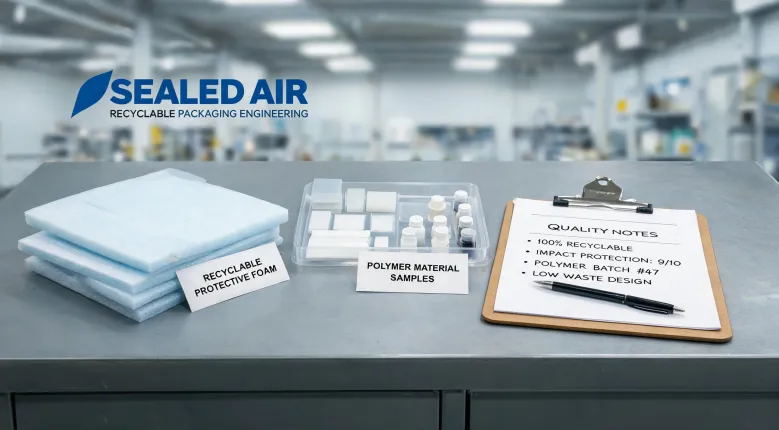
It started with a sustainability report landing on my desk. Not the glossy, company-wide one that gets sent to investors – I'm talking about the internal quarterly report from our facilities team. We'd missed our waste reduction target by 14%, and the biggest culprit was the protective packaging we used for outgoing shipments.
I manage purchasing for a 400-person company across three locations. In 2024, we spent roughly $180,000 on protective packaging alone, split across eight vendors. My boss (VP of Operations) just looked at me and said, 'Fix it.'
I'm an office administrator, not a materials scientist. I know paper clips and toner cartridges – polyethylene foam and plastic carabiners weren't exactly in my wheelhouse. But here we were.
So, I dove in.
The First Mistake: Asking for 'Recyclable' Without Being Specific
I sent out an RFP to our current vendors. 'Need recyclable protective packaging,' I wrote. Simple, right?
Wrong.
One vendor offered me a 'recyclable' paper-based solution. Another sent quotes for corrugated wraps. A third tried to upsell me on 'compostable' foam that I later discovered wasn't accepted by our local municipal composting facility.
Meanwhile, the Sealed Air rep had been calling me for months. I'll be honest – I ignored them. I assumed they were just another big plastics company trying to greenwash their products. But their subject line kept catching my eye: Sealed Air Sustainability Report.
I finally opened it. It had actual data: certified recyclable content percentages, third-party certifications, and a clear explanation of their Cell-Aire polyethylene foam. It wasn't just marketing fluff.
Why Cell-Aire Made Me Pause
We use a lot of polyethylene foam – the pink stuff that's a pain to dispose of. But Sealed Air's version, Cell-Aire, was designed to be recycled through existing soft plastic drop-off programs (the kind you see at grocery stores).
I'm not 100% sure on the exact chemical composition, but their sustainability report claimed it was a mono-material – unlike some laminates that are impossible to recycle. That was the key. We didn't need to change our entire supply chain; we just needed a better material from a supplier who could prove it.
The Process: From Login to Logistics
Getting started with Sealed Air wasn't a single-click affair. I had to get a sealed air login for their customer portal, which was a small hassle (I hate setting up new vendor accounts). But once I was in, the transparency was refreshing. I could see lead times, download spec sheets, and in my opinion, the product documentation was better than any of our other vendors.
Then came the real test: the plastic carabiner.
This was a weird one. We occasionally ship custom parts to a client in the outdoor industry, and they required a specific, reusable carabiner attached to the shipment. We'd been buying cheap plastic carabiners from a novelty supplier for 40 cents each. But the supplier couldn't provide RoHS or Reach compliance docs – a dealbreaker for this client.
I found that Sealed Air offered a line of durable, recycled-content plastic carabiners as part of their retail packaging accessories. The cost was 65 cents per unit – a 62% increase. I said 'as soon as possible' to finance, but they heard 'whenever convenient.' Result: the order was delayed by two weeks while I fought for the budget. In the end, budget approval was easier than I expected. The compliance paperwork alone was worth the extra 25 cents.
The Unexpected Wrinkle: Shredded Polyurethane Foam
We also had a line item for shredded polyurethane foam, used as void fill for a lab equipment shipper. The lab manager loved it. Logistics hated it – it was messy, generated a lot of dust, and wasn't recyclable anywhere.
I tried to push them toward Sealed Air's paper-based void fill, but the lab manager dug in his heels. 'We need static dissipation!' he argued. 'That shredded foam works.'
We were using the same words but meaning different things. I was talking about sustainability; he was talking about performance specs. Discovered this when I finally sat down with a Sealed Air technical rep. They offered a custom-cut piece of cellulosic foam that met the static dissipation requirements and was certified recyclable. It cost 15% more per unit, but it eliminated 100% of our waste from that process.
Gator Board vs Foam Board FedEx: The Comparison That Almost Broke Me
Then there was the great board debate. For our heavy signage shipping, we'd always used standard foam board. But FedEx rates had gone up, and the dimensional weight was killing us. My shipping coordinator asked me to compare gator board vs foam board fedex pricing.
Quick background: Gator board is a foam board with a rigid plastic skin – much stiffer, but heavier. Foam board is lighter but less durable.
I ordered samples from three suppliers, including Sealed Air. I'm not a packaging engineer, so I did the dumb thing: I dropped a box of each from a 4-foot high cart. The gator board survived. The foam board... didn't. But Sealed Air's specific grade of foamed polyethylene was a middle ground – lighter than gator board, stronger than standard foam board.
Take this with a grain of salt: my 'test' wasn't scientific. But for our needs, the Sealed Air product was the winner. FedEx shipping costs were 8% lower than with gator board, and we had zero damage claims in the first quarter.
Decision Paralysis and the Final Call
Even after choosing Sealed Air for three product lines, I kept second-guessing. What if their quality didn't hold up across all three locations? The two weeks until the first delivery were stressful.
I hit 'confirm' on the first big purchase order and immediately thought, 'Did I just lock us into a more expensive supplier for the sake of a sustainability report?' Didn't relax until the delivery arrived on time, correct, and our operations team reported zero complaints.
The Sealed Air rep even helped me set up a quarterly review in their portal to track our waste reduction metrics. That level of support was unexpected.
The Real Numbers
Here's what changed in 6 months:
- Total packaging spend: Up 6% (from the carabiner premium and cellulosic foam)
- Recyclable content: 67% of our protective packaging (up from 12%)
- Waste disposal costs: Down 22% (less non-recyclable waste to landfill)
- Vendor count: Consolidated from 8 vendors to 5 – Sealed Air became a primary supplier for 3 categories
From my perspective, the extra 6% in spend was justified. Our internal sustainability report now shows us on track to meet next year's target. And my VP? He hasn't mentioned it since. That's the highest praise an admin buyer can get.
Lessons Learned
If you're an office administrator who suddenly has to make sustainable packaging decisions, here's my advice:
- Read the sustainability report. Not just the marketing page. Look for third-party certifications and specific polymer claims.
- Set up a vendor login. The web portal makes reordering and tracking so much easier – it saved our accounting team about 6 hours per month.
- Test the product yourself. My 'drop test' was dumb but effective. Ask for samples.
- Don't ignore compliance. That plastic carabiner issue could have cost us a client. Sealed Air had the docs ready.
- Budget for the premium. Sustainable packaging often costs more upfront. But factor in waste reduction, better shipping insurance, and easier compliance. It evens out.
I'm not a packaging expert. I'm just the person who has to make it work without anyone complaining. And for us, Sealed Air worked.
Note: Pricing is as of Q1 2025. Verify current rates with your Sealed Air rep. This is my personal experience; your mileage may vary based on volume and shipping requirements.

Jane Smith
I’m Jane Smith, a senior content writer with over 15 years of experience in the packaging and printing industry. I specialize in writing about the latest trends, technologies, and best practices in packaging design, sustainability, and printing techniques. My goal is to help businesses understand complex printing processes and design solutions that enhance both product packaging and brand visibility.
Leave a Reply