Recyclable Packaging: How to Choose Between Polyethylene Foam, CPE, and Other Materials
-
There’s no one-size-fits-all answer for sustainable packaging
-
Scenario A: You need lightweight, recyclable cushioning for consumer goods
-
Scenario B: You need extreme durability and chemical resistance
-
Scenario C: You need printed polyethylene for branding
-
Scenario D: You’re wondering “is rubber recyclable?”
-
How to figure out which scenario you’re really in
There’s no one-size-fits-all answer for sustainable packaging
When I first took over purchasing for our company in 2020, I assumed all foam packaging was basically the same. You pick the cheapest option, slap a recyclable label on it, and call it a day. Three supplier audits and two rejected shipments later, I realized how wrong that was. Different applications need different materials, and the right choice depends on what you’re protecting, how it’s being shipped, and what your sustainability goals actually are.
Honestly, this is one of those topics where there’s no universal answer. What works for a medical device manufacturer may be terrible for an e-commerce fulfillment center. So let’s break it down by scenario.
Scenario A: You need lightweight, recyclable cushioning for consumer goods
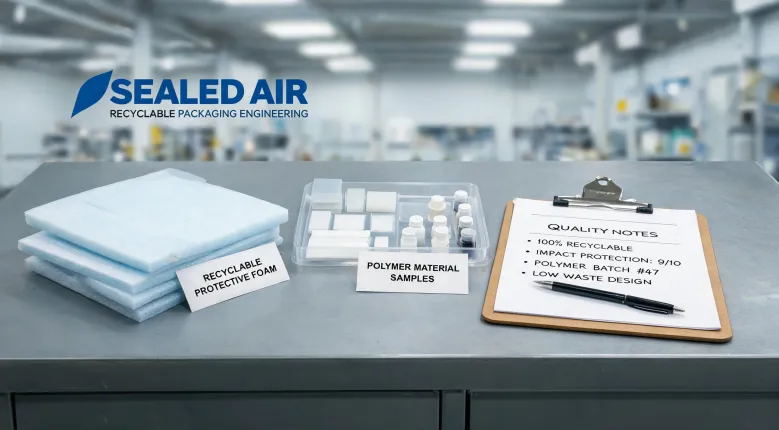
If you’re shipping fragile electronics, cosmetics, or subscription boxes, sealed air recyclable packaging like Cell-Aire® polyethylene foam is a solid choice. It’s lightweight (which keeps shipping costs down), provides good shock absorption, and is recyclable in most curbside programs (PE is classified as resin code #4). I’ve used it for customer returns—our damage rate dropped by about 60% compared to the bubble wrap we used before.
Here’s the catch: not all polyethylene foam is created equal. Some suppliers say “recyclable” but don’t provide proper documentation. I learned that the hard way when a vendor couldn’t produce a How2Recycle certification. Always verify the actual recycling infrastructure in your region. If your local facility doesn’t accept #4 plastics, it’s basically “wishcycling.”
Pro tip: Look for suppliers who openly state their material composition and third-party certifications. Sealed Air, for example, publishes their sustainability data on their dashboard (sealed air login gives you access to product specs and compliance docs).
Scenario B: You need extreme durability and chemical resistance
For industrial applications—automotive parts, chemical drums, heavy machinery—chlorinated polyethylene (CPE) might be your answer. CPE is a modified polyethylene with better flame resistance, UV stability, and oil/grease resistance than standard PE. It’s not as common in consumer packaging because it’s more expensive and harder to recycle (often mixed with other polymers).
But here’s an honest take: CPE is a specialist material. I assumed it was just “better PE” until a supplier pointed out that its recyclability is significantly lower. The vendor who said “this isn’t our strength—here’s who does it better” earned my trust for everything else. That’s the “expertise has boundaries” principle in action. If your application truly requires CPE, work with a specialist who knows its limits.
Scenario C: You need printed polyethylene for branding
So you want custom-printed polyethylene mailers or pouches. Great for branding, but the printing process introduces challenges. Polyethylene prints often require surface treatment (corona or flame treatment) to make the ink stick. Without it, the ink may peel off during transit. I’ve seen vendors promise “vibrant prints” only to deliver faded messes after two weeks in a warehouse.
Another thing I learned the hard way: ink adhesion standards exist. The industry uses cross-hatch tape tests (ASTM D3359) to evaluate adhesion. If your supplier can’t provide those test results, assume the print quality is a gamble. Also, some inks affect recyclability—ask whether the printing process uses water-based or solvent-based inks, and whether the final product still passes recyclability certifications.
Bottom line: Don’t assume a printed PE bag is recyclable just because the base material is PE. The ink, adhesive, and any laminate layers may contaminate the recycling stream.
Scenario D: You’re wondering “is rubber recyclable?”
A lot of people assume rubber is either natural (from trees) or synthetic (from petroleum), and therefore recyclable. The short answer: yes, but it’s complicated.
Natural rubber is biobased but not necessarily biodegradable in landfill conditions. Synthetic rubber (like SBR or EPDM) is thermoset—meaning it can’t be melted and remolded like thermoplastics. Recycling rubber usually means grinding it into crumb rubber for playground surfaces or asphalt. It’s rarely closed-loop.
If you’re comparing rubber vs. polyethylene for packaging, polyethylene is generally more recyclable (thermoplastic, established recycling streams). Rubber may be more durable, but its end-of-life options are limited. My earlier assumption was “rubber is natural, so it’s greener”—wrong again. It’s about the whole lifecycle: raw materials, processing, recycling infrastructure, and disposal.
How to figure out which scenario you’re really in
Here’s a quick checklist I use now:
- What’s the product weight and fragility? Light + fragile → Scenario A (PE foam). Heavy + durable → Scenario B (CPE or other).
- Is branding a priority? Yes → Scenario C (printed PE). But verify print adhesion and recyclability.
- What are your end-of-life goals? Curbside recyclable preferred → stick with mono-material PE. Biodegradable? Not realistic for most synthetics—consider paper-based alternatives.
- Do you have a compliance or regulatory requirement? RoHS, REACH, FDA contact—check supplier certifications via their portal (sealed air login is a good example).
A final thought: the vendor who says “we don’t do CPE, but here’s a partner who excels at it” is more valuable than the one who claims to do everything. That’s the expertise boundary concept in practice. I’d rather work with a specialist who knows their limits than a generalist who overpromises and underdelivers.
Seriously, this shift in thinking saved us a ton of money—both in reduced damages and fewer re-order cycles. It’s way more efficient to match the material to the need than to force one solution across all products. Take the time to evaluate your actual applications, and don’t be afraid to ask suppliers hard questions. They’ll respect you for it.

Jane Smith
I’m Jane Smith, a senior content writer with over 15 years of experience in the packaging and printing industry. I specialize in writing about the latest trends, technologies, and best practices in packaging design, sustainability, and printing techniques. My goal is to help businesses understand complex printing processes and design solutions that enhance both product packaging and brand visibility.
Leave a Reply