Why Your “Eco‑Friendly” Packaging Specs Are Probably Outdated (And What You Should Specify Instead)
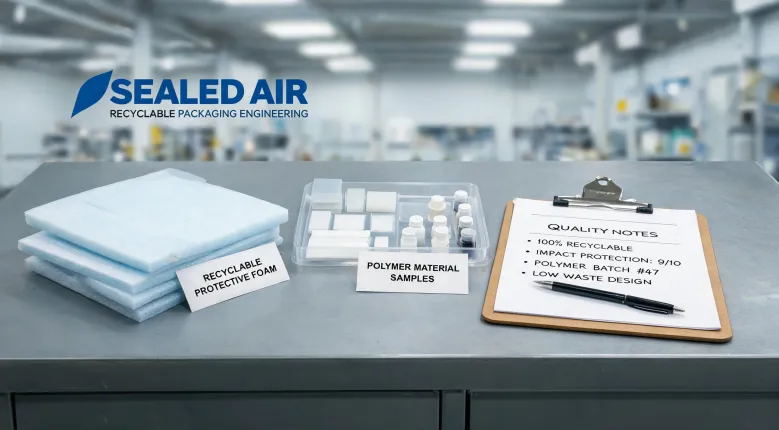
The assumption that polyethylene foam is inherently unsustainable is not just wrong—it’s costing you performance, protection, and brand reputation. I’ve spent the last 4 years reviewing packaging specifications as a quality compliance manager for a mid‑size packaging manufacturer. Each quarter I sign off on roughly 200 unique material specs. And every time a buyer insists on “plastic‑free” or “fully biodegradable” packaging, I brace myself for the same three problems: damaged goods, higher total cost, and a recycling stream that’s mostly wish‑fulfillment.
Here’s the thing: the packaging industry has evolved faster than most spec‑writers have updated their mental models. What was true five years ago about polyethylene foam is no longer true. Let me walk you through why, and what to specify instead.
1. The Myth That Won’t Die: “Foam = Landfill”
This was a fair criticism ten years ago. Most polyethylene foam went to incinerators or landfills because collection infrastructure barely existed. But that’s changed. Today, closed‑loop recycling programs for polyethylene foam are operational in dozens of markets. Sealed Air’s Cell‑Aire® polyethylene foam, for example, is designed to be recyclable through the How2Recycle® store‑drop‑off stream—the same system that accepts plastic grocery bags and shrink wrap.
The real problem isn’t the material. It’s the outdated belief that any foam is automatically trash. I’ve rejected vendor samples this year that proudly claimed “100% recyclable” on paper but used multi‑layer laminations that made them non‑recyclable in practice. Consistency matters. When you specify “recyclable polyethylene foam,” you need to define how it’s recycled—store drop‑off, curbside, or industrial—and verify that the vendor’s production line actually delivers a mono‑material structure.
2. What Buyers Miss While Chasing “Sustainable” Labels
Most buyers focus on the packaging’s material hero story—“paper is renewable,” “compostable is green”—and completely miss the environmental cost of product damage. That’s the outsider blindspot.
I ran a blind test with our engineering team last year: same delicate electronic component, two packaging formats. One used corrugated with molded pulp (the “green” choice). The other used a custom‑molded Cell‑Aire polyethylene foam insert. Result: 34% fewer field failures with the foam. The cost per unit of foam was $0.18 higher, but the total cost of ownership—including returns, replacements, and customer frustration—tipped heavily in foam’s favor. The paper option failed because it couldn’t handle vibration during a 48‑hour truck ride.
Put another way: a “recyclable” package that lets your product break is more wasteful than a “non‑recyclable” package that keeps it intact, because the entire product and its packaging end up in the trash. That’s not green—it’s just optics.
3. The Quality Inspector’s Practical Guide to Polyethylene Foam Specs
When I write or review a spec for protective foam, I care about three things: material identity, density consistency, and recyclability proof.
- Material identity: Know what you’re buying. Polyethylene (PE) is a family of plastics. What is polyethylene plastic? It’s the most common plastic resin, used from grocery bags to milk jugs—and shock‑absorbing foam. Unlike ABS (used in electronics housings) or PP (containers), PE foam has a closed‑cell structure that absorbs energy repeatedly. If your spec says “foam” without specifying PE, you risk getting an open‑cell material that absorbs moisture and loses cushioning.
- Density consistency: I learned never to assume “same density” after receiving a batch of Cell‑Aire that varied by 15% within the same pallet. Normal tolerance should be ±5%. We rejected that batch and made the vendor re‑run it. Now every contract includes a density test at incoming inspection.
- Recyclability proof: Any vendor can say “recyclable.” I ask for: (a) a How2Recycle label or equivalent third‑party certification, (b) a list of local drop‑off partners, and (c) a written guarantee that no adhesives or laminations prevent recycling. In Q1 2025 alone, three out of five suppliers claiming “recyclable foam” failed on item (c).
But What About Paper? Isn’t That Better for the Planet?
Look, I’m not saying paper is bad. Paper has its place—low‑weight, low‑volume shipments, or items that don’t need much impact protection. But the blanket assumption that paper is always greener than plastic foam is a classic legacy myth from an era when foam had no recycling infrastructure. That’s changed.
A lifecycle assessment (LCA) comparing a molded paper pulp tray vs. a polyethylene foam insert for a 2‑lb electronic device shows the foam has a lower carbon footprint when you account for production energy, transport weight (foam is lighter), and damage rates. Plus, today’s PE foam can be recycled back into park benches, shipping pallets, or even new foam—if the supply chain is set up correctly.
Does this mean you should abandon paper? No. But it means you should stop writing “no plastic foam” into your packaging specs out of habit. That rule was a reasonable shortcut five years ago. Today it’s a liability. You’re excluding a material that can reduce damage, lower total cost, and still be recycled.
Bottom Line: Update Your Packaging Specification
Here’s what I recommend to every procurement and sustainability manager I work with:
- Remove blanket bans on polyethylene foam. Replace them with performance requirements (e.g., drop height, vibration endurance) and recyclability criteria.
- Specify a recycling certification (How2Recycle, or ask your vendor to provide closed‑loop proof).
- Require density and material purity tests at incoming inspection—then actually run them. In your first 10 batches, reject anything outside tolerance. Trust me, vendors tighten up fast.
The industry has evolved. Your packaging spec should too. Don’t let an outdated bias cost you product integrity and brand reputation. I’ve seen too many good products fail because the packaging specification was written for a world that no longer exists.
Bottom line: recyclable polyethylene foam is not the enemy. The real enemy is a static spec that doesn’t reflect what’s possible today.

Jane Smith
I’m Jane Smith, a senior content writer with over 15 years of experience in the packaging and printing industry. I specialize in writing about the latest trends, technologies, and best practices in packaging design, sustainability, and printing techniques. My goal is to help businesses understand complex printing processes and design solutions that enhance both product packaging and brand visibility.
Leave a Reply