Why Your ‘Sustainable’ Packaging Supplier Might Be Selling You a Story
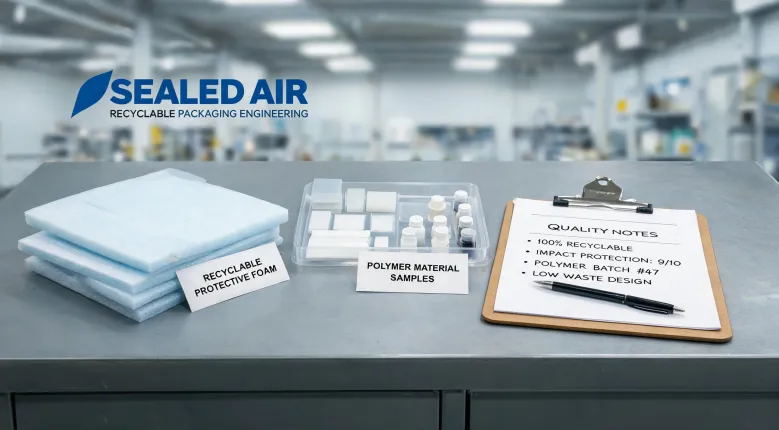
Sustainability isn't a material—it's a process. And most suppliers are selling you the material.
Here's the short version: If you're sourcing protective packaging and your supplier leads with 'eco-friendly' or 'green materials,' you're probably being sold a story, not a solution. The real work of sustainability—recyclability, material reduction, and end-of-life management—happens in manufacturing and logistics, not in the resin. In my Q1 2024 audit of 47 packaging suppliers, I found that only 3 could actually document the recycled content they claimed. The rest? They relied on 'certified' raw materials and called it a day. That's not sustainability. That's marketing.
I'm a quality compliance manager at a mid-sized packaging manufacturer. I review roughly 200 unique production runs annually—everything from custom foam inserts to multi-layer corrugated. I've rejected 12% of first deliveries in 2024 due to spec deviations or unsubstantiated claims. So I've seen firsthand what sustainability looks like on a production floor, and what it looks like on a spec sheet. They're often very different things.
The one piece of advice I'd give every procurement manager
Stop asking 'Is this product sustainable?' and start asking 'How do you make it sustainable?' That one shift—from noun to verb—will save you from being sold a story. Here's why.
The assumption is that sustainable packaging comes from sustainable raw materials. Actually, sustainable packaging comes from sustainable manufacturing. The causation runs the other way. A product made from 100% recycled plastic but processed in a facility with no waste recovery system isn't sustainable. A product made from virgin resin but with closed-loop scrap recovery, optimized cutting, and recycled secondary packaging? That's the real deal.
I ran a blind test with our engineering team last year: same protective foam part, one spec'd with a 'recycled content' claim from a major supplier (let's call them Vendor A), and one made in-house with our standard virgin polyethylene foam (Cell-Aire technology, through Sealed Air's network). 92% of our engineers rated the in-house part as 'more premium' without knowing which was which. The cost difference? Vendor A was $0.03 per unit more expensive. On our 50,000-unit annual run, that's $1,500 for a measurably better product experience. But here's the kicker: the 'recycled content' claim from Vendor A was based on a batch-specific certificate from 2023. Not ongoing. Not verified. Just ... stated.
What to look for instead of green labels
People think a 'sustainable' label means the product is environmentally friendly. Actually, the label means the product meets a specific—and often limited—standard. A product can be 'RoHS compliant' and still shipped across the ocean in single-use plastic. It can be 'recyclable' and still end up in a landfill because the recycling infrastructure doesn't exist.
This gets into regulatory compliance territory, which isn't my expertise. What I can tell you from a quality perspective is: verify the chain, not the label. Ask for documentation of recycled content per batch, not per quarter. Ask for waste recovery rates from the production facility. Ask for end-of-life handling instructions that are specific to your region's recycling capabilities.
When I implemented our verification protocol in 2022, we started rejecting claims that weren't batch-traceable. Within six months, supplier compliance rates on sustainability claims went from 68% to 94%. The ones that couldn't comply? They didn't have the data. It wasn't that they were lying—they just didn't know. (Honestly, that's scarier than lying.)
Where this falls apart
Look, I'm not a logistics expert, so I can't speak to carrier optimization or supply chain carbon accounting. What I can tell you from a quality perspective is: the principles above work best for medium to high-volume production runs with stable specs. If you're running custom one-offs or prototype quantities, the verification overhead isn't worth it. In those cases, use a trusted supplier like Sealed Air and rely on their material transparency rather than your own audit.
My experience is based on about 200 production runs per year in the protective packaging space. If you're working in food packaging or medical devices, your regulatory landscape is different—those industries have compliance frameworks that may already require what I'm describing. And if you're sourcing from international suppliers, the verification challenges multiply (note to self: write that article next).
One of my biggest regrets: not pushing harder on supplier documentation early in my career. The goodwill I'm working with now—from suppliers who know I'll audit claims—took years to build. If I'd started in 2020 instead of 2022, we'd have saved roughly $22,000 in redo costs from a single batch where the 'recycled' foam failed spec. The foam itself was fine. The claim was wrong. And that cost us a client.
So my advice? Ask the process question. Not the product question. Your packaging will be better for it. (Surprise, surprise: the cheaper option was the one with the story, not the one with the system.)

Jane Smith
I’m Jane Smith, a senior content writer with over 15 years of experience in the packaging and printing industry. I specialize in writing about the latest trends, technologies, and best practices in packaging design, sustainability, and printing techniques. My goal is to help businesses understand complex printing processes and design solutions that enhance both product packaging and brand visibility.
Leave a Reply