Verification First: The Sustainable Packaging Lesson That Cost Me $3,200
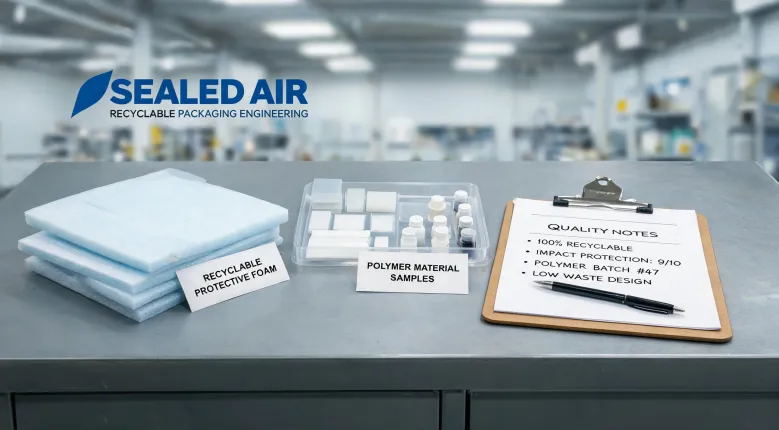
Everything I’ve read about sustainable packaging before 2017 said the same thing: choose the right material, and the rest will follow. Six years in packaging procurement later, I think that's textbook logic, not real-world logic. The material matters—but it's the verification process around it that makes a product truly sustainable. Or, to put it in the terms I use with my team: five minutes of checking beats five days of rework.
I’m not a chemist or a recycling compliance expert. I'm a purchasing manager who has processed more packaging orders than I can count. But I've made a lot of mistakes in that time—I've documented eight significant ones since 2018, totaling roughly $14,000 in wasted budget. The expensive part wasn't the orders themselves. It was the time we spent recovering from errors that could have been caught with a single email or a five-minute search.
The $3,200 Lesson That Changed How I Buy Packaging
In September 2022, we ordered 800 pieces of protective packaging for a mid-size electronics maker. The product was a Sealed Air polyethylene foam—specifically, their Cell-Aire line. The spec sheet said "recyclable." It even had a How2Recycle-style label. That looked like a no-brainer to me.
I checked the dimensions. I checked the density. I checked the part number. I did not check whether the client's local recycling facility would actually accept foam. Because, you know, the material spec said recyclable. That should be enough, right?
It wasn't. The client called me about a week later: their local transfer station wouldn't take foam. Not just Sealed Air foam—any foam. They were told to put it in the trash. So $3,200 worth of carefully-sourced, compliant, recyclable-labeled foam wound up in a landfill. That still makes me cringe.
That order taught me a lesson nobody told me in training: a recycling claim is not a recycling plan. A material can be recyclable in principle, but if the local infrastructure doesn't accept it, then from the customer's perspective, it isn't. And as the person who specified it, the responsibility sat with me.
So, Can Plastic Bags Be Recycled?
This is probably the question I get most often during supplier Q&A sessions. The short answer is: yes, many plastic bags and films really can be recycled. But "can be" has as many asterisks as a credit card agreement.
According to the EPA's recycling guidelines (epa.gov/recycle), clean plastic bags and film are accepted at many grocery store drop-off locations. How2Recycle (how2recycle.com) says the same thing, with an extra kicker: they have to be clean. Dry. No tape, no labels, no packing slips. That includes the kind of air pillows and bubble cushioning that Sealed Air and other manufacturers make.
I learned that the hard way during a pilot program in 2023. We collected air pillows from a client and took them to a store drop-off. The attendant pointed out that a few pillows had tape residue on them. We'd contaminated that whole pile—about 40 pounds of plastic film. It was supposed to be recycled; instead, it was rejected. Another forty minutes of sorting, plus a slightly red-faced phone call to the client.
So if you're wondering "can plastic bags be recycled?"—yes, but check first. The ten-second check is cheap. The cleanup after a recycling rejection is not.
What the Polyurethane Foam Process Taught Me About Verification
Before that, in early 2021, we were evaluating a custom cushioning application. Two options were on the table: a polyurethane foam process and a traditional polyethylene foam process from Sealed Air. On paper, the polyurethane foam process won on density and rebound performance. Honestly, I was pretty sold on it.
Then our quality manager asked, "What about REACH certification?" And I kind of froze. Not because the supplier was unworthy—but because I hadn't thought to ask. Polyurethane foam, like any engineered material, can contain additives that raise compliance questions. So can polyethylene. The point isn't that one is better. The point is that both have to be verified.
That process got me thinking about plastic pipe fittings. My grandfather used to install PVC plumbing, and he never trusted the box. He measured the fitting, checked the threading, and confirmed it against the pipe. For him, the cost of skipping that check was a leak. For us in packaging, the cost of skipping a compliance check is a rejected shipment or a failed sustainability audit. Same logic.
The pipe fitting standard may be printed on the side, but you still need to measure the inside diameter. Packaging claims are actually harder, because there's rarely a universal "recyclable" checker. You have to ask your supplier, ask your local facility, and ask your customer where the package will end up.
I'm not a materials scientist, so I can't speak to the molecular structure of every foam. But I can speak to procurement: if it isn't on paper, it didn't happen. Request the certifications, read them, file them before you approve the part.
The "I Don't Have Time" Objection
I can already hear the pushback. "We're lean. We don't have time to research every recycling stream or supplier document." I used to say the same thing. Then I spent a week explaining to my boss why $3,200 of "sustainable" packaging wasn't actually recyclable.
Prevention isn't a luxury. It's the cheapest insurance you don't have to claim. After my third mistake, I created a 12-point pre-order checklist. It covers material specs, supplier certifications, local recycling acceptance, label accuracy, and a few other landmines I've found over the years. In the past 18 months, that checklist has caught 47 potential errors and saved us an estimated $8,000 in rework. A checklist isn't glamorous, but it works.
No one has ever asked me for a refund on a checklist. I've even had suppliers thank me for making the requirements explicit. And the best part? When something goes wrong now, we know exactly which check missed it—and we can fix the process instead of just the order.
This worked for us, but your mileage may vary—especially if you're in a different region or vertical. Local recycling infrastructure varies a lot. That's exactly why you need your own verification process instead of relying on what works in another city.
Bottom Line: Prevention Over Cure
I have mixed feelings about "recyclable" labels. Part of me is glad they're everywhere; they nudge people toward better decisions. But another part knows that a label can hide the gaps in the system. When you see "recyclable" on a poly bag or a foam sheet, that's the start of the conversation, not the end.
Sealed Air's sustainability work is a good example. Their focus on polyethylene foam recovery and film recycling goes beyond what I'd have expected from a packaging materials company. But none of those innovations help unless someone on the ground—maybe you, maybe me—takes the time to check that the product is being used in the right way and disposed of in the right channel.
That's what I think "sealed air sustainability" really means. It's not just about lighter materials or marketing claims. It's about making sure every package actually reaches a recycling or reuse stream. One small mistake can ruin an entire initiative: if a customer tries to recycle a product and gets rejected, they'll never trust your "green" claim again.
So here's my hard-won advice: check first, order second, regret never. The most sustainable packaging decision you'll make is the one you verify before you buy.

Jane Smith
I’m Jane Smith, a senior content writer with over 15 years of experience in the packaging and printing industry. I specialize in writing about the latest trends, technologies, and best practices in packaging design, sustainability, and printing techniques. My goal is to help businesses understand complex printing processes and design solutions that enhance both product packaging and brand visibility.
Leave a Reply