I Wasted $2,400 on Cheap Packaging. Here's What Switching to Sealed Air Recyclable Packaging Taught Me
Let me start with a number: $2,400. That's what a single shipment of our plastic retainers cost us in damaged goods claims last July. And every one of those claims traced back to the same root cause—packaging that looked fine on paper but didn't survive reality.
I'm the office administrator for a mid-sized plastics manufacturer. I handle purchasing for our shipping supplies—boxes, inserts, void fill, tape. Roughly $180,000 a year across maybe a dozen vendors. I report to operations and finance, which means I get yelled at from both sides when something goes wrong.
This story starts with a customer complaint. Then another. Then a chargeback.
The Day I Realized Our Packaging Was the Problem
It was a Tuesday in early July. I got an email from our logistics manager with a photo attached. A box of our precision plastic retainers—the kind used in automotive assemblies—showed up at the customer's dock with the corner crushed inward. Retainers scattered everywhere. The customer's receiving team had to sweep them up and sort them by hand. Not exactly the impression we wanted to make.
At first, I blamed the carrier. But then our warehouse lead pointed something out: the box itself wasn't structurally weak. The problem was how the product was protected inside. We were using coroplast sheets as dividers—that's that corrugated plastic sheeting you see in political yard signs and temporary outdoor displays. It's rigid, sure. But it's also slippery. The retainers shifted during transit, piled up in one corner, and punched right through the coroplast when the box got dropped.
I remember thinking: this is what I get for trying to save money.
Coroplast vs Foam Board: The Comparison Nobody Talks About
If you search for "coroplast vs foam board" online, you'll get a lot of hobbyist advice. Which one is better for mounting photos? For school projects? For garage signs? Not much out there about packaging engineered components.
So let me break it down from someone who's tested both in the real world:
- Coroplast is cheaper, water-resistant, and recyclable in many curbside programs. But it has almost no shock absorption. It's a rigid barrier, not a cushion.
- Foam board (the common polyethylene foam sheet) absorbs impacts way better. It compresses under load and bounces back. The downside? Most standard foam board isn't curbside recyclable, and it costs more.
Here's what I learned the hard way: if your product can shift in transit—and most can—coroplast alone won't protect it. We needed something that could handle both vibration and impact. Foam board was the obvious answer, but the sustainability angle worried me. Our company had just made a public commitment to reduce non-recyclable packaging. I didn't want to trade one problem for another.
That's when I started digging into whether there was a better option.
Finding Sealed Air: The Official Website Rabbit Hole
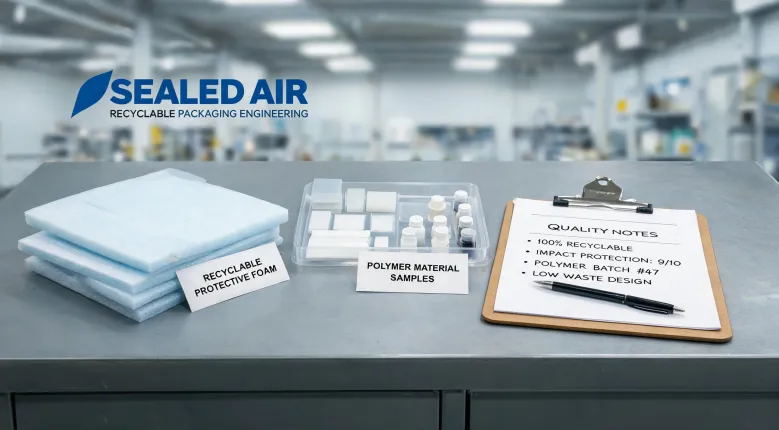
I'll be honest—I knew Sealed Air mostly from the Bubble Wrap brand. But I wasn't sure what else they did. So I went to the sealed air official website (sealedair.com) and started poking around. That's where I found their recyclable packaging line. Specifically, they make polyethylene foam products that are designed to be recyclable through store drop-off programs. Not just the same old foam with a green logo slapped on—actually designed with recycling in mind.
One product stood out: their Cell-Aire polyethylene foam. It's lightweight, flexible, and has that cushioning performance I was looking for. But the real kicker? It's recyclable at participating locations. According to the FTC Green Guides, a product can be called "recyclable" only if recycling facilities are available to at least 60% of the population. Sealed Air publishes their recycling locator right on the site, which tells you where to drop off the film and foam. That level of transparency—actually showing me the network—made the claim feel legit.
I also found that they offer custom-engineered packaging. You send them your product specs, and they design a protective solution around it. For someone like me who doesn't have a packaging engineer on staff, that's a game-changer.
The Transition: What Actually Happened
We didn't switch overnight. I'm too risk-averse for that, and honestly, the finance team would've killed me if I signed a big contract without proof.
First, I ordered samples. Ran our plastic hammers and retainers through a drop test. You know what? The Sealed Air foam outperformed our coroplast setup by a long shot. The hammers—yes, we also ship plastic hammers for industrial maintenance—would've survived a fall from a forklift height. Our coroplast setup barely survived a standard warehouse drop.
Then I ran a pilot shipment. 50 boxes to one of our more tolerant customers. Got their feedback after delivery. Zero damage. Zero complaints. The packaging was also easier for their receiving team to break down and recycle, which earned us some goodwill.
Once I had that data, I went to finance. I showed them the damage claims from the previous two quarters—$5,700 total in product loss plus $1,200 in expedited shipping for replacements. The new packaging cost about 18% more per box. But when we mapped it against the damage rate and the admin time spent processing claims, the ROI was obvious. I got the green light to switch all our foam and void fill over to Sealed Air recyclable options within two months.
What I Wish I'd Known from the Start
Here's the part that still bugs me: I almost didn't bother looking. I'd read all the standard advice—"compare coroplast vs foam board by weight," "use the cheapest void fill," "packaging is a commodity." Conventional wisdom said the cheapest option that doesn't fall apart is good enough.
My experience suggests otherwise. The real cost of packaging isn't the price per box. It's the price per undamaged delivery. And that changes the math completely.
I'll also admit something: I had a bias against "sustainable" packaging. I assumed it meant sacrificing performance—that I'd end up with those flimsy molded pulp inserts that crumble in humidity. The Sealed Air stuff was the opposite. It performed better than the traditional foam we'd been using, and it was recyclable. That combination isn't as rare as I thought, but you do have to look for it.
Most buyers focus on the upfront cost of packing materials and completely miss the damage claims, replacement shipments, and customer goodwill that eat 3-5x the savings. The question everyone asks is "what's your best price?" The question they should ask is "what's the total cost of delivered goods in perfect condition?"
How to Make the Switch Without Getting Burned
If you're in a similar spot, here's my practical checklist:
- Audit your damage rate first. Pull 6 months of claim data. If you're losing more than 1% of shipments to damage, your packaging is worth fixing.
- Get samples before you commit. Any reputable supplier—including Sealed Air—will send samples. Run your own drop test.
- Check the recyclability claim. Don't take "eco-friendly" at face value. Use the FTC Green Guides as your baseline. If a company can't tell you where their packaging can be recycled, that's a red flag.
- Pilot with a tolerant customer. Tell them you're changing packaging and ask for feedback. The ones who care about sustainability will actually appreciate it.
- Do the full cost math. Compare the new packaging cost against your damage claim savings, replacement shipping, and the hours you spend dealing with angry customers.
One more thing about coroplast. If you're shipping flat, rigid items that can't shift—like signs or substrate sheets—coroplast is still a fine choice. It's not useless. But for anything with moving parts, curves, or weight distribution issues, I'd take polyethylene foam any day. I have mixed feelings about the upfront cost increase, but the quiet quarter I've had since the switch? No damage claims, no angry calls, no rushed replacement orders. That's worth more than the packaging savings ever were.
According to USPS pricing effective January 2025, a First-Class Mail large envelope starts at $1.50. But that's for documents. For actual products, you're in parcel territory, and the packaging matters way more than the stamp. And if you're wondering whether you can legally put marketing materials in residential mailboxes—don't. That's a federal no-no under 18 U.S. Code § 1708. I only mention it because I once had a supplier suggest we slip promo inserts into mailboxes. Nope.
If you're evaluating packaging suppliers, take it from someone who ate $2,400 in damage claims because he wanted to save $0.30 a box: the savings aren't worth it. Look at the sealed air official website, compare the data, run the pilot, and make the switch. Your customers—and your finance team—will thank you.

Jane Smith
I’m Jane Smith, a senior content writer with over 15 years of experience in the packaging and printing industry. I specialize in writing about the latest trends, technologies, and best practices in packaging design, sustainability, and printing techniques. My goal is to help businesses understand complex printing processes and design solutions that enhance both product packaging and brand visibility.
Leave a Reply