Sealed Air Cell-Aire vs. Polyurethane vs. Foam Board: A Procurement Manager's Guide to Protective Packaging
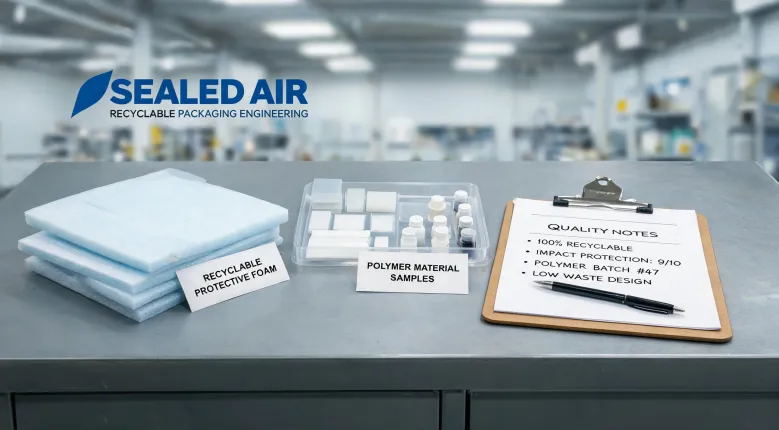
I've managed packaging procurement for a mid-sized electronics manufacturer for six years. Our annual packaging spend runs around $180,000, and I've compared more foam samples than I care to count. When a product manager asks me "what's the best protective foam?", I always give the same answer: it depends. That's not a cop-out. It genuinely depends on three things: your product's weight, your shipping volume, and who's asking about sustainability.
If you can place yourself into one of the three scenarios below, the material decision gets a lot clearer.
Scenario A: High-volume, lightweight products (under 15 lbs)
If you're shipping electronics accessories, cosmetics, or other moderately fragile items under about 15 pounds, you're in Scenario A. For you, Sealed Air Cell-Aire polyethylene foam is the total-cost winner. I want to say we switched to Cell-Aire in early 2022 — though don't quote me on the exact month — and it was one of the least painful supplier changes we've made.
Before that, we used a generic PE foam from a regional supplier. It looked identical on paper: same nominal density, same thickness range. But the difference showed up in damage claims. We went from roughly 6% of shipments damaged to just over 2% after the switch. Consistency.
(Should mention: we also standardized our box dimensions at the same time. But we isolated the foam variable on one product line for a month, and the Cell-Aire material alone cut damage by nearly half.)
Why does Cell-Aire outperform generic PE when the spec sheets look similar? After tracking this for six years, I'd say it comes down to manufacturing consistency. Sealed Air's foam has a uniform cell structure run after run. The generic product occasionally arrived with soft spots — sections that felt less dense, like the process wasn't fully controlled. That kind of variability doesn't show up in a material spec sheet. It shows up in customer complaints and replacement shipments.
Here are actual numbers from our purchasing records. We buy Cell-Aire sheets from 1/4-inch to 1-inch thick. Our average cost as of Q1 2025 was about $0.13 to $0.17 per square foot for the thinner gauges. The generic PE was roughly 15% cheaper per square foot. But the cheaper material's hidden costs — extra handling, higher damage rate, re-packaging labor — turned the savings into a net loss. Switching to Cell-Aire saved us roughly $8,400 per year on the main product line.
One practical note: if you're buying Sealed Air materials, look for the sealed air logo on the foam or its packaging. There are look-alike products on the market that borrow similar brand colors. If a supplier can't clearly document the product's source, walk away.
Scenario B: Heavy items, sharp edges, or high drop risk
If you're shipping products over 15 pounds, items with sharp metal edges, or anything that may face drops over 3 feet during handling, PE foam isn't enough. This is where I see companies waste money trying to save money.
A colleague at a furniture hardware company lived through this last year. Steel brackets, 20 to 30 pounds per carton. Their supplier had them on thick foam board — high-density PE, 2 inches thick. Material cost ran around $4.20 per board. Damage rates were acceptable. But the freight bill was brutal because the heavy foam pushed every carton over the LTL weight break.
I should have pushed him toward polyurethane foam earlier. It's easy to dismiss polyurethane because the price per cubic foot runs higher than PE. But if you evaluate on shock absorption per dollar — the metric that actually matters for heavy products — polyurethane wins.
The polyurethane foam industry has shifted meaningfully since around 2018. Today's flexible PU foams aren't the brittle, yellowing material from earlier decades. High-resilience formulations recover compression, absorb repeated impacts, and deliver significantly more shock protection per pound than PE. For a 25-pound product with a 3-foot drop requirement, a 2-inch polyurethane layer outperforms a 4-inch PE slab. That means a smaller box, lighter carton, lower freight cost.
Here's the kicker: my colleague cut about 12 pounds of shipping weight per carton by switching. At roughly 500 cartons per month shipped by LTL freight, that saved about $3,000 a month on freight — far more than the material cost increase.
Thick foam board still has its place, though. If you need compression resistance — stacking heavy cartons six feet high in a warehouse — rigid foam board is the right answer. Polyurethane absorbs impact well but will creep under sustained load. I don't have hard data on exactly how much PU compresses over a year of racking. From what we've seen in storage audits, a 2-inch sheet can lose 10-15% of its thickness under constant weight if the design doesn't account for it.
Scenario C: Sustainability requirements are on the table
If your retail accounts have started asking about recyclability — or your company has public sustainability targets — you're in Scenario C. This is where packaging decisions get genuinely complicated.
Here's a question I hear constantly from internal stakeholders: "what plastic is PP, and is it recyclable?" PP is polypropylene, and it appears everywhere in packaging: strapping, tape, film, hinged containers. It's technically recyclable, but commercial recovery rates are low because PP products vary widely in formulation. If your packaging contains PP, expect tough conversations with sustainability teams.
PE — polyethylene — is an easier story. Low-density and linear low-density PE are among the most recycled plastics globally. Recycled-content PE foam is commercially real too. I visited a recycling facility in Ohio in 2023 that accepted post-industrial PE foam and reprocessed it into new film and foam products. That wasn't a pilot; it was operating at scale.
I should add that I used to assume "plastic-free" was the goal everyone was moving toward. After three years of watching this space, I've changed my mind. For protective packaging, plastic foam often has a lower carbon footprint than molded pulp or corrugated alternatives — because it's lighter and provides more protection per pound. The real question isn't "is it plastic?" It's "is the plastic designed for recovery?"
Sealed Air's recyclable PE foam options — including products with recycled content — are designed with that recovery question in mind. Polyurethane, by contrast, is thermoset: it doesn't melt and re-form. It can be downcycled into carpet underlay, but true closed-loop recycling isn't there yet. If end-of-life recyclability is part of your customer conversation, PE foam is the stronger argument.
How to determine which scenario you're in
I use a three-question framework with our team. It's not complicated, and it takes less than a day to work through:
- Drop-test the actual product. Put your product in a test carton with each material candidate. Drop it from the height your logistics team says is realistic. If the cheapest foam passes, that's your answer. Don't over-engineer protection you don't need.
- Weigh the whole carton, not just the foam. Total shipping weight determines freight cost. A slightly more expensive foam often pays for itself in freight savings. Look at total delivered cost, not price per board foot.
- Ask the sustainability question now, not later. If you're in retail or e-commerce, a customer will ask about recyclability eventually. Better to answer well the first time than to retrofit a new material later.
To be honest, I learned this framework the hard way. In my first year, I had 2 days to choose a cushioning material for a rush product launch. Normally I'd have spent two weeks testing. Instead, I went with the cheapest option based on a single quote. The first shipment arrived with a 9% damage rate. Our customer noticed, and we ate $1,200 in replacements plus a damaged relationship. I still remember that approval form — one line item, poorly considered. Now every packaging decision goes through the three-question framework, and we haven't had a preventable damage issue since.
If you're still uncertain, call Sealed Air and ask to speak with a packaging engineer — not a salesperson. Give them your product weight, drop height, volume, and sustainability constraints. If they can't recommend a specific material and thickness, find a supplier who can. An informed customer asks better questions. And honestly, that makes the whole process smoother for everyone.

Jane Smith
I’m Jane Smith, a senior content writer with over 15 years of experience in the packaging and printing industry. I specialize in writing about the latest trends, technologies, and best practices in packaging design, sustainability, and printing techniques. My goal is to help businesses understand complex printing processes and design solutions that enhance both product packaging and brand visibility.
Leave a Reply