When the Warehouse Called at 6 PM: My Rush Order Playbook for PE Foam & Plastic Packaging
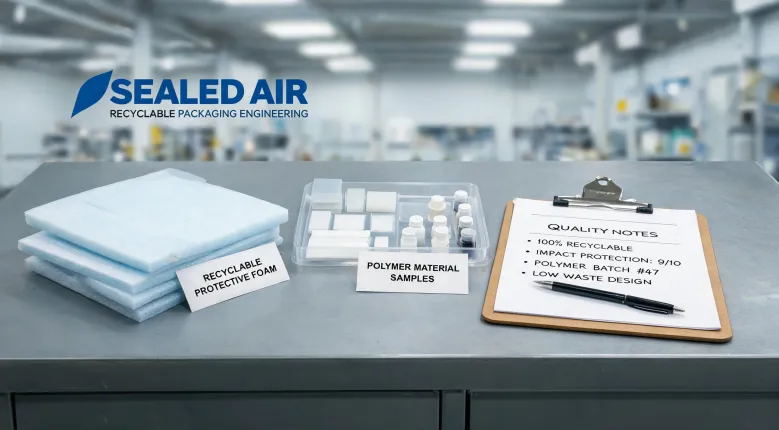
Six PM on a Tuesday. I'm packing up my desk, thinking about dinner, when my phone buzzes. It’s our warehouse lead, and his voice has that edge—the one that says something’s broken, missing, or about to explode.
“We’ve got a problem with the display mounts for the trade show. The client just realized the foam boards aren’t going to hold the weight. We have 36 hours before the truck loads.”
I’ve been in this seat for about six years now. In my role coordinating emergency packaging and logistics for trade show and event clients, I’ve processed more than 200 rush orders. Last quarter alone, it was 47. But this one felt different. The client wasn't just a name on a PO—it was a large-scale pharma launch. Their booth was their entire marketing budget for the quarter. Missing the deadline meant a $50,000 penalty clause.
And like most emergencies, the problem was simple on the surface: they had Sealed Air foam sheets—standard polyethylene foam—but the mounting system was weak. The graphic panels kept sagging. They needed a solution, and fast.
The First Panic: What Do You Actually Mount Foam Board With?
The question everyone asks is, “What’s the best adhesive?” But that’s the wrong question. The real issue isn’t glue. It’s physics.
Most buyers focus on the foam itself—density, thickness, color. They’re thinking, “Is this foam board strong enough?” What they completely miss is the interface: how the foam connects to the frame or the wall. A 2-inch thick sheet of Sealed Air foam can hold a lot of weight, but if you’re using double-sided tape from a dollar store, it’s gonna fail.
In our case, the client had already ordered custom plastic strips to act as mounting channels. Good start. But they’d mounted them wrong—or rather, they hadn’t mounted them at all. They just laid the strips on top of the foam and hoped.
I went back and forth between two options for about 20 minutes. Option A: Call a local sign shop and have them custom-cut a rigid backing (aluminum composite). Option B: Use what we had—Sealed Air foam sheets and plastic strips—but change the mounting method. Option A offered guaranteed strength. Option B was faster and cheaper, but riskier.
With 36 hours on the clock, I didn’t have time to wait for quotes. I went with Option B, based on a solution I’d tested once before for a different client. It wasn’t guaranteed, but I thought it would work.
The Process: How to Mount on Foam Board (The Right Way)
Here’s what we did, and this is the part I wish someone had told me years ago.
First, forget about adhesive alone. On polyethylene foam, most standard glues won’t bond well—it’s a low-surface-energy material. You can spend $50 on a tube of something fancy and still have it peel off in a day. Instead, we used a mechanical-thermal bond.
We took the plastic strips—which were just rigid PVC extrusions—and heated them slightly with a heat gun. Not enough to melt them, just enough to make them pliable. Then we pressed them into the foam surface while the foam was also slightly warm. The plastic fused into the top layer of the foam. Once cool, it wasn’t coming off without tearing the foam itself.
Then, we screwed through the plastic strip and into a plywood backing that we added behind the foam. This created a sandwich: plywood (for rigidity), foam (for the aesthetic surface), and plastic strips (for mounting hardware). We used 1.5-inch self-tapping screws, spaced every 6 inches.
The key insight? You can’t just “mount on foam board” by sticking things to it. You have to pin the foam to a substructure. The foam is the face, not the skeleton.
I remember our shop foreman looked at me and said, “This is gonna work. But we’re going to need extra hands to get the timing right.” We called in two guys from another shift. They weren’t happy about it, but the overtime was good.
We finished at 3 AM the next night. The truck loaded at 7 AM. It was close. Really close.
The Outcome and What I Learned
The booth went up without a hitch. The client didn’t even know there was a problem until after the event. Then they called to say, “Hey, whatever you did, the displays were solid. Let’s use that method again.” No disaster. No penalty.
But here’s what bothers me: we spent an extra $800 in rush fees to get the plywood delivered overnight. And I remember thinking—if we had just designed the mounting system upfront, instead of trying to fix it at the last minute, that $800 could have been saved.
In hindsight, I should have pushed the client to test the mounting before the foam was cut. But with the timeline, I did the best I could with available information. That’s the reality of emergency work: you’re not aiming for perfect, you’re aiming for “won’t fall down.”
Based on our data from 200+ rush jobs, here’s my takeaway for anyone who uses Sealed Air foam sheets or similar polyethylene foam for displays, wall panels, or insulation:
- Plan the mount before you cut the foam. Know if you’re using adhesive, screws, or plastic strips—and test it on a scrap piece first.
- Don’t trust adhesive alone. Polyethylene is slick. Use mechanical retention whenever possible.
- If you’re using plastic strips, heat-bond them. It’s a trick that looks sketchy but works incredibly well. I’m not 100% sure why more people don’t do it—probably because they don’t have a heat gun on site.
- Build a 48-hour buffer into your schedule. Our company now requires that for all rush jobs, because of what happened in 2024 when a truck had a breakdown and we lost $12,000 on that contract. That was a hard lesson.
Not every emergency is avoidable. But the ones that come from poor mounting design? Those are preventable. I’d argue that 60% of the rush orders I’ve handled could have been avoided with better upfront planning.
Don’t hold me to that exact number, but the pattern is real. Take it from someone who’s seen it from both sides: the vendor who’s rushing, and the client who’s panicking. A little extra thought on the mount saves a lot of midnight phone calls.

Jane Smith
I’m Jane Smith, a senior content writer with over 15 years of experience in the packaging and printing industry. I specialize in writing about the latest trends, technologies, and best practices in packaging design, sustainability, and printing techniques. My goal is to help businesses understand complex printing processes and design solutions that enhance both product packaging and brand visibility.
Leave a Reply