Sealed Air Cell-Aire Polyethylene Foam: A Purchasing Pro's Honest Take on Protection vs. Cost
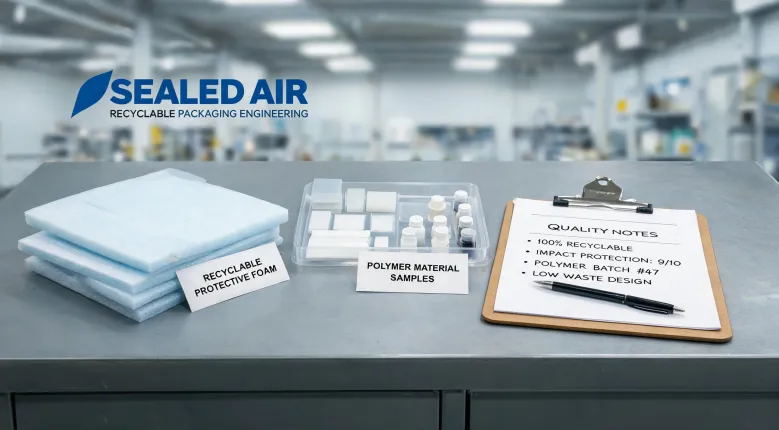
If you're buying protective packaging, here's the short version: Sealed Air Cell-Aire polyethylene foam is a safe bet for most standard applications, but it's not magic. The real question isn't 'is it good?'—it's 'is it right for what you're shipping?'
I'm an office administrator for a 200-person manufacturing company, and I manage all our packaging and supply ordering—roughly $50,000 annually across about a dozen vendors. I took over this role in 2020, and let me tell you, the first year was a crash course in what happens when you assume all foam is the same. (Spoiler: it's not.)
Sealed Air, the company behind the famous Bubble Wrap, makes a product called Cell-Aire. It's a lightweight polyethylene (PE) foam used for cushioning, surface protection, and insulation. It's everywhere—from protecting electronics to lining cases of wine bottles. But for a purchasing person like me, the real story is in the details that vendors and sales sheets sometimes gloss over.
What is Cell-Aire, Actually?
Cell-Aire is a closed-cell polyethylene foam. It's the stuff that looks like a thin, soft, white sheet—often with a slight texture on one side. It's different from the open-cell foam you'd find in a mattress or a filter. Closed-cell means it doesn't absorb water, resists dust, and offers consistent cushioning because air is sealed in its own little pockets. According to Sealed Air's product literature, it's made from PE, which is one of the most common and recyclable plastics—though the term 'recyclable' in packaging is a minefield we'll get to later.
In my experience, it excels at one thing: consistent, lightweight protection for flat or gently contoured items. We use it for the delicate glass components of our industrial sensors. We've also used it to line boxes for our flat-packed assembly kits. It works. Period.
The 'Flammable' Question (and Other Misconceptions)
One of the first things I had to sort out was a question from our safety officer: 'Is this foam board flammable?' The short answer is yes—like almost all foams. But the context matters. Standard polyethylene, like the kind in Cell-Aire, will ignite and burn. The question isn't 'is rigid foam board flammable?' (it is, as a general rule), but 'does it meet our specific fire safety regulations?'
Here's where Sealed Air's compliance story is actually helpful. They have a range of products that meet different standards, like UL 94 or FMVSS 302. I've learned never to assume 'same specifications' means identical results across vendors. In 2022, I almost switched to a cheaper PE foam from a smaller supplier—saving maybe $150 per order. But they couldn't provide proper documentation on flame retardancy. Finance rejected the purchase order. I had to re-source in a panic. Net loss: about $400 in my overtime and a very annoyed VP. I now verify those compliance certificates before even looking at the unit price.
(As of January 2025, at least, the specific compliance sheet for Cell-Aire is readily available on their official website. I'd still call and confirm for your particular state or country regulations, though.)
Where It Shines: The 'Cell-Aire Sweet Spot'
So when should you specify Sealed Air Cell-Aire? From my experience processing about 60-80 orders a year for our three locations, it's the sweet spot for:
- Intermediate protection: For items that need more than a paper wrap but less than a custom foam cradle. Think: returned electronics, spare parts in transit, or boxed internal shipments.
- Surface protection: When you're worried about scratches or scuffs. The textured side helps grip the product, reducing movement inside the box.
- Indoor or general transit: Not for extended outdoor exposure or something that will get truly wet. It's water-resistant, not waterproof (i.e., it can handle a sprinkle but not a puddle).
Let me rephrase that: the 'value' isn't just the price per square foot. It's the certainty. For our mid-range orders (around $500-1000), the cost of a damaged part—plus the rush shipping and customer service nightmare—is far higher than the premium for a trusted name. The lowest quoted price often isn't the lowest total cost.
Where It Falls Short: The Boundaries No One Talks About
My experience is based on about 200 mid-range orders over five years with standard domestic shipping. If you're working with luxury, oversized, or temperature-sensitive cargo, your experience might differ significantly. Here are the hard-to-swallow truths I've learned:
- It's not for everything. For very heavy items (say, over 50 lbs), a stiffer foam like cross-linked PE or polyurethane is often better. Cell-Aire compresses too much under significant weight.
- The 'recyclable' claim is complicated. Yes, PE is technically recyclable. But your local recycling facility might not accept foam sheets, especially if they're mixed with tape or labels. The promise of '100% plastic-free' packaging is a red flag I've learned to spot. Nothing about this is plastic-free.
- Price volatility is real. In late 2023, we saw a 15% price surge from our main supplier (Sealed Air) due to resin costs. I called around, and all major foam suppliers followed suit. There was no 'budget' alternative that week that also met our compliance needs.
Is it the 'best' foam? No such thing. But if you need a reliable, lightweight, and compliant option for general protective packaging—and you can live with its non-zero environmental footprint—it's a solid choice.
My advice: get a sample first (they'll send one), test it with your actual product, and verify your specific compliance requirements. An informed customer asks better questions and gets better service. Simple.

Jane Smith
I’m Jane Smith, a senior content writer with over 15 years of experience in the packaging and printing industry. I specialize in writing about the latest trends, technologies, and best practices in packaging design, sustainability, and printing techniques. My goal is to help businesses understand complex printing processes and design solutions that enhance both product packaging and brand visibility.
Leave a Reply