Why I Stopped Overthinking Foam Board and Just Started Ordering It
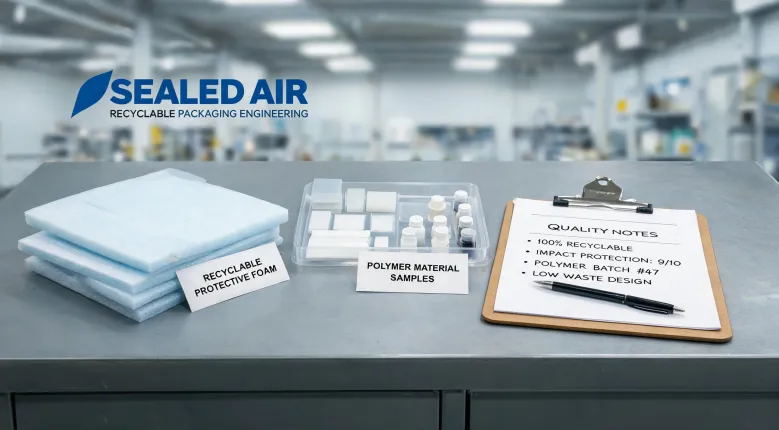
When I first took over purchasing for our company back in 2020, I assumed the absolute lowest unit price was the only metric that mattered. My logic was simple: everyone in the company rewards you for saving money on the P&L. So I spent weeks hunting for the cheapest 30x30 foam board, the most aggressive price on clear polyethylene sheeting. I thought I was being smart. I was wrong.
After about 18 months and a few very expensive lessons, I realized that chasing pennies on the unit price is a trap. The real cost isn't on the invoice; it's in the time, the friction, and the risk you absorb when you work with a vendor who is 'cheap' but inefficient. Efficiency is a competitive advantage for my department, and that means buying from a supplier like Sealed Air who makes the process invisible, not the one who sells me $0.03 cheaper foam but takes three days to reply to an email.
The Vendor Hopping Nightmare
In our 2024 vendor consolidation project, we reviewed our buying history across 10 different suppliers for shipping and packaging materials. We processed roughly 60-80 orders annually for things like foam board and polyethylene rolls. The pattern was clear: whenever I switched to a new supplier to save 5% on the unit cost, I lost that saving—and then some—in administrative overhead.
I'd have to re-enter credit terms, verify new certifications (note to self: always check RoHS compliance on new vendors early), and chase down proper invoicing. A vendor I used in Q3 2022 couldn't provide a standard electronic invoice—only handwritten receipts. Finance rejected $2,400 in expenses because they couldn't verify the purchase. That 'cheap' foam board cost me my budget credibility. Now? I look at the total cost of ownership. A stable, digital-ready partner like Sealed Air might cost a few cents more per sheet, but the time saved is worth ten times that.
The 'Tape and Glue' Problem That Nobody Talks About
There's a very practical problem that I see in warehouse forums but rarely in sales brochures: joining foam board together. You search for 'how to join foam board together' and you get a dozen hacks—double-sided tape, hot glue, mechanical fasteners. The reality is that if your foam board isn't consistent in density and thickness, those joints fail. And if you're using a generic clear polyethylene that's too thin, it tears under the tape tension.
I used to think all polyethylene foam was basically the same material, just different thicknesses. That was my initial misjudgment. The difference between a Sealed Air product and a no-name sheet is in the dimensional stability (i.e., it doesn't warp or shrink when you cut it). When you're making 30x30 foam boards for display or insulation, a warp of even 1/8th of an inch makes the piece unusable. I've had entire batches rejected by our assembly team because the cheap board didn't hold a straight edge. That's the hidden cost that never shows up on the initial quote.
Digital Efficiency Isn't Just Buzzwords—It's Survival for My Role
Look, I know 'digital efficiency' sounds like something a consultant would sell to a CEO. But in my world—managing supplies for 400 employees across 3 locations—it's about not getting buried in paperwork. The Sealed Air ordering portal lets me reorder standard items in about 3 clicks. I don't have to call, I don't have to email a PDF, I don't have to confirm a fax (ugh, some vendors still use fax).
I admit that the old, 'relationship-based' way of doing things had value. I push back on anyone who says tradition is useless. But for standardized items like foam board and protective packaging, the manual approach was costing our accounting team about 6 hours a month in reconciliation. When I switched to a digital-first vendor, we cut that to zero. That's efficiency I can defend to my VP.
You might argue: 'What if I need a custom size or a special adhesive coating?' Fair point. For high-customization jobs, a traditional vendor with a human touch is irreplaceable. But in my experience, 80% of our orders are standard sizes. And for that 80%, chasing the absolute cheapest price and ignoring the order process is a mistake. Efficiency is a competitive advantage—for your budget, your time, and your sanity.
Why I'm Sticking with Sealed Air (For Now)
Don't get me wrong. I'm not saying every single product they make is the cheapest on the market. I'm not 100% sure their pricing is lower than everyone else—take this with a grain of salt, as I haven't price-checked all 50 SKUs in 2025. But what I am sure of is that the friction cost of managing a cheap, inefficient vendor is higher than any possible savings. As of January 2025, our supplier consolidation report shows that switching to Sealed Air for our core polyethylene and foam board needs saved us 4 hours of administrative work per week (Source: internal department audit, Q4 2024). That's time I can spend on things that actually matter, like fixing the inventory system (mental note: finally implement cycle counting this quarter).
Chasing the lowest unit price on commodity materials is a fool's errand for anyone managing a supply chain. The real cost is efficiency. Choose the partner that makes the process easy. I learned that the hard way, so you don't have to.

Jane Smith
I’m Jane Smith, a senior content writer with over 15 years of experience in the packaging and printing industry. I specialize in writing about the latest trends, technologies, and best practices in packaging design, sustainability, and printing techniques. My goal is to help businesses understand complex printing processes and design solutions that enhance both product packaging and brand visibility.
Leave a Reply