Expanded Polyethylene vs. Polyurethane Foam: A Buyer's View on Total Cost, Compliance, and Sealed Air Cell-Aire
-
The Short Answer: EPE First, PU Only for One-Drop Protection
-
Why I Started Tracking Total Cost Instead of Unit Price
-
Expanded Polyethylene vs. Polyurethane: What the Names Actually Mean
-
Compliance Is a Cost Center: RoHS and REACH in Packaging
-
Where to Buy Polyurethane Foam (and Why I Don't Buy It for Reusable Packaging)
-
When I Recommend Sealed Air Cell-Aire—and When I Don't
The Short Answer: EPE First, PU Only for One-Drop Protection
If you're buying protective packaging, the material matters less than the total cost per protected unit—and for most reusable applications, expanded polyethylene (EPE) will beat polyurethane (PU) on that metric. That conclusion comes from tracking $180,000 in packaging spend over six years—or rather, six and a half fiscal years—and comparing quotes from eight vendors. I've standardized our reusable case inserts on Sealed Air Cell-Aire polyethylene foam. Not because the brand is flashy. Because the total cost per shipping cycle is lower.
I'm a procurement manager at a mid-sized industrial equipment manufacturer. I've managed our packaging budget for six years, analyzed every invoice in our cost tracking system, and negotiated with more than twenty suppliers. I don't have a materials engineering degree, so I can't speak to polymer chemistry. What I can tell you is how to evaluate packaging materials from a buyer's seat: what drives cost, what hides in the fine print, and when to walk away.
Why I Started Tracking Total Cost Instead of Unit Price
In 2023, a new foam supplier quoted us 11% less per sheet than our incumbent. On paper, it was a no-brainer. I get why someone would jump at that. But I'd been burned before, so I ran the quote through the total cost spreadsheet we built after an earlier incident. That earlier supplier promised 'free setup' and later charged us $450 in change fees and rework. I still kick myself for accepting a verbal promise. If I'd gotten the setup terms in writing, we would have avoided that hit.
The 2023 quote was the same story, different layer. The cheaper sheet had lower density. Our packaging engineers said we'd need two layers to pass the same drop test. Doubling the material and adding a labor step wiped out the savings. The 'cheap' option was actually 17% more expensive per protected unit. That's the number I saved in my spreadsheet, and I use it every time a vendor leads with price.
Expanded Polyethylene vs. Polyurethane: What the Names Actually Mean
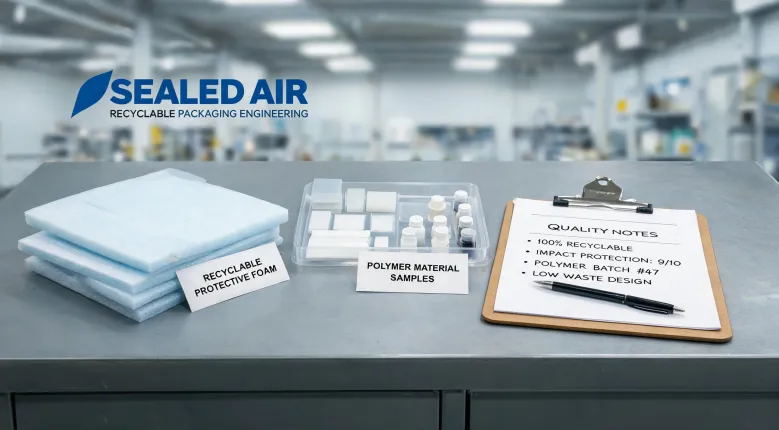
Expanded polyethylene is a closed-cell foam. It's lightweight, resistant to moisture and chemicals, and it survives repeated impacts without disintegrating. That makes it a strong candidate for reusable dunnage, edge protectors, and case inserts. Sealed Air's Cell-Aire is one of the EPE products we use after evaluating alternatives over the years. It's not the only option, but it has consistently shown up with the right balance of price, compliance documentation, and field performance.
Polyurethane foam is a different animal. Flexible PU is often open-cell, so it absorbs water and degrades faster in humid conditions. It's excellent at absorbing high energy from a single impact—that's where it shines. But for reusable packaging, PU tends to break down, and the replacement cost kills the lower upfront price. If you're packaging a heavy machine that ships once and never comes back, PU might make sense. If your crate will bounce through a warehouse more than twice, EPE is usually the better buy.
And then there's polypropylene sheet, which often gets mixed into the same conversation. Polypropylene sheet is not a cushioning foam. It's a rigid or semi-rigid material used for surface protection, layer pads, or thermoformed trays. I've seen buyers order polypropylene sheet when they actually needed impact protection. They're different tools. If someone quotes polypropylene sheet for drop protection, ask for impact data before you sign.
Compliance Is a Cost Center: RoHS and REACH in Packaging
For us, compliance documentation is part of total cost. If a packaging material fails our customer's restricted-substance review, the cost isn't just a rejected shipment—it's a delayed production line and a damaged relationship. That's why I track RoHS and REACH documentation as carefully as price.
When we ask a packaging supplier for RoHS and REACH compliance packaging documentation, we're looking for a supplier who can trace the material back through the supply chain. As of Q1 2025, Sealed Air publishes these declarations for its packaging materials, including Cell-Aire. I ask our Sealed Air rep for the current documents before every contract renewal. I'd say the same to any buyer: don't rely on a marketing page. Ask for a dated document. A supplier who can't produce evidence is a supplier who hasn't thought about it.
Technically, the RoHS Directive 2011/65/EU applies to electrical and electronic equipment, not to packaging in isolation. But many of our customers require RoHS and REACH documentation on everything that enters their facility, including packaging. REACH—Regulation (EC) No 1907/2006—directly affects substances in articles and requires suppliers to communicate information on substances of very high concern. If a packaging supplier can't produce a REACH declaration, I treat that as a red flag.
I'm not a compliance lawyer, so I can't interpret the regulations for your specific product. What I can tell you from procurement is that 'we're compliant' means nothing without a document. We've walked away from a lower-priced supplier because their entire compliance response was one vague sentence. The risk wasn't worth the savings.
Where to Buy Polyurethane Foam (and Why I Don't Buy It for Reusable Packaging)
If you found this page because you searched 'where to buy polyurethane foam,' you probably have a specific application in mind. Maybe you need acoustic panels, upholstery foam, or a high-impact disposable insert. In that case, buy from suppliers who publish density, compression, and ILD numbers—not just a color and a firmness label.
- McMaster-Carr carries flexible polyurethane foam sheets, rolls, and blocks with technical specs.
- Grainger lists polyurethane foam in a range of thicknesses and hardness ratings.
- Uline stocks foam sheets and rolls, mostly for packaging and cushioning.
- Foam Factory and FoamOrder are useful if you need custom-cut polyurethane foam.
I'll be honest about my own boundary: I haven't purchased PU from all of those suppliers, and I'm not a foam chemist. I've evaluated PU samples for specific packaging projects and concluded that for our reusable work, EPE from Sealed Air gives us better cost per cycle. If you're designing a one-time protective cradle for an expensive machine, polyurethane might be the right call. Just ask for real load-compression data before you commit.
When I Recommend Sealed Air Cell-Aire—and When I Don't
I recommend Sealed Air Cell-Aire for protective case inserts, dunnage, surface protection, and packaging that needs to survive more than one shipping cycle. It also works well for electronics and industrial components where moisture and chemical resistance matter. In those applications, it's been the lowest total cost option we've found. That's not a guess—it's from our quarterly cost reviews and documented order history.
I don't recommend it for single-event, extreme impact protection where polyurethane's energy absorption is clearly better. If you're shipping an engine block once and never returning it to the crate, don't force EPE to be something it isn't. Use a purpose-built high-impact foam or work with a packaging engineer. I also wouldn't use EPE for rigid tray structures; that's a job for polypropylene sheet or corrugated plastic.
No packaging material is universally best. The honest version is this: if you have unusual temperature ranges, chemical exposure, or regulatory requirements, test samples yourself. Our procurement policy now requires quotes from three suppliers and a documented drop test before we approve a new material. That policy exists because I was burned once, and I don't want it to happen again.

Jane Smith
I’m Jane Smith, a senior content writer with over 15 years of experience in the packaging and printing industry. I specialize in writing about the latest trends, technologies, and best practices in packaging design, sustainability, and printing techniques. My goal is to help businesses understand complex printing processes and design solutions that enhance both product packaging and brand visibility.
Leave a Reply