I Used to Think Sealed Air Was Just Bubble Wrap. I Was Wrong.
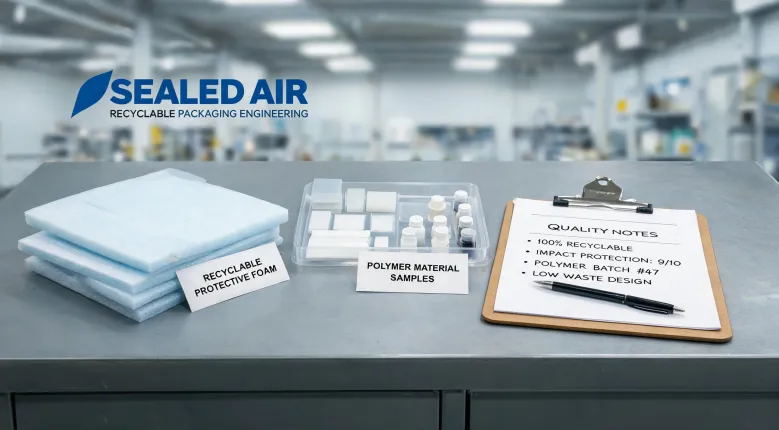
I've been managing packaging and facility supplies for a 400-person company for about five years. Roughly $200,000 a year in orders—maybe $220,000, I'd have to check the PO log. I report to both operations and finance, which means I get pressure from both sides: operations wants things to work, finance wants things to cost less. When I took over purchasing in 2020, I had a simple hierarchy: paper good, plastic bad, lower price best. That hierarchy didn't survive contact with real supply chains.
Here's my opinion: most procurement teams are still using a 2015 mental model of packaging suppliers. If you think of Sealed Air as “the bubble wrap company” or assume that foam packaging is automatically the environmental villain, you're making decisions on outdated assumptions. The industry has moved, and the real risk isn't change—it's buying based on a logo you remember instead of the capabilities on the actual sealed air website.
Why I changed my mind
From the outside, buying packaging looks simple: get quotes, compare prices, order. The reality is that the same-looking polyethylene foam can have different recycled content, different additive packages, and completely different documentation.
I didn't fully understand that until March 2023. A vendor substituted a cheaper foam for a production run without telling us. It looked identical. It even had the same thickness. But it didn't pass our customer's REACH documentation, and we had to air-freight replacement material. That mistake cost us around $6,000 in freight and a bruised relationship with operations. I didn't fully understand the difference between material compliance and material price until that order.
It took me four years and too many supplier calls to understand that the packaging industry's definition of “better” has changed. Here are three examples.
1. Sealed Air is not just bubble wrap anymore
Sealed Air still makes bubble cushioning, but the product mix also includes Cell-Aire polyethylene foam, recyclable mailers, high-performance films, and protective packaging with engineered sustainability (think reduced weight, recycled content, and source reduction). If I'm evaluating a vendor, I don't rely on memory. I go to the sealed air website and look at the product data sheets. I also look for the sealed air logo on packaging—not as a style preference, but because counterfeit and grey-market suppliers often use similar-looking foam without the same documentation.
2. Search results are not a sourcing strategy
Search for “sealed-air” and you'll get the Sealed Air company website. Add a term like high-duty o-ring seals, and the results mix in a completely different product category. I once received a quote that was technically addressed to us but included a catalog page for high-duty o-ring seals. The supplier had matched on a keyword, not on the specification.
That's why I now ask three questions before adding a vendor:
- Does the quoted product match the specification and the material certificates?
- Can they provide a REACH declaration or RoHS compliance statement if the order requires one?
- Does the invoice show a brand, product name, and lot identifier?
3. Technical questions reveal who's actually selling
The most common internal request I get is “can I paint foam board insulation?” The answer is not a simple yes or no. If it's PE foam insulation (the closed-cell polyethylene foam used for cushioning and some insulation), most solvent-based paints can damage it. Water-based acrylic paint can work, but you need to test adhesion first. A supplier who asks “what type of foam?” is the one I want to buy from. A supplier who gives a blanket answer is guessing.
I remember one facilities manager asked me that exact question. I said yes without checking the material. The paint peeled off within a week. (Note to self: I owe them a better answer.) That mistake taught me a simple thing: good procurement is usually about asking the next question, not knowing everything upfront.
What this means for purchasing
In our 2024 vendor consolidation project, we cut from 14 suppliers to 8. We didn't choose the lowest quoted price for foam. Total cost included REACH paperwork, delivery reliability, and the cost of a failed shipment. That lesson applies across packaging, foam, and insulation—not o-ring seals. I'm mixing it up with the search-engine example again.
The old rule—“get three quotes and buy the cheap one”—was designed for a world with simpler materials and simpler supply chains. In that world, a product was a product. In 2025, the document that comes with the product can be worth more than the product itself.
A quick defense of buying local
The objection I usually hear is: “We buy from local suppliers; we don't need a big national brand.” I understand that. In 2020, I would have said the same. But after five years of managing these relationships, I've learned that “local” is not a substitute for “documented.” If a local distributor can provide the same certifications for PE foam insulation or sealed-air packaging, that's great. If they can't, you're accepting risk to save a few hundred dollars.
I'm not saying every company should buy directly from Sealed Air. There are good distributors and specialty fabricators. But you need to verify what you're buying. The sealed air logo is not decoration; it's a traceability marker. The sealed air website is not just a brochure; it's where the data sheets live.
Also, don't assume a paper alternative is automatically greener. If it's heavier, arrives damaged, or can't handle a cold chain, it isn't sustainable. The most sustainable package is the one that protects the product and can be processed where it ends up. That's a life-cycle question, not a material-snobbery question.
On compliance, I don't accept “trust me.” I ask for a REACH declaration and, where relevant, a RoHS test report. If that sounds heavy, remember that the responsibility usually sits with the company placing the product on the market, not just the manufacturer. As of March 2025, the ECHA website is still the authoritative place to check REACH requirements. I won't quote the latest SVHC number from memory—I'd have to check—but I know this is not optional when your customer requires it.
The bottom line
The industry has evolved, and your supplier checklist should too. That doesn't mean abandoning relationships or ignoring cost. It means asking harder questions about the material, the documentation, and the actual product—not the memory of a logo. What was best practice in 2020 may not apply in 2025. The fundamentals haven't changed—quality, cost, delivery—but the execution has transformed.

Jane Smith
I’m Jane Smith, a senior content writer with over 15 years of experience in the packaging and printing industry. I specialize in writing about the latest trends, technologies, and best practices in packaging design, sustainability, and printing techniques. My goal is to help businesses understand complex printing processes and design solutions that enhance both product packaging and brand visibility.
Leave a Reply