Plastic Packaging in a Pinch: How to Choose the Right Material (and Avoid a Last-Minute Disaster)
Which Plastic Problem Are You Actually Solving?
I don't know what you're dealing with right now, but I can almost guarantee it falls into one of three buckets. In my role coordinating packaging and material choices for companies under tight deadlines, I've handled 200+ rush orders. The worst mistakes happen when someone treats a plastic problem as if there's a one-size-fits-all answer.
There isn't. The right move depends on whether you're sourcing packaging, repairing a plastic part, or evaluating a material for a product like plastic tumblers. So let's break it down.
Scenario A: You Need Packaging—And You Needed It Yesterday
This is the one I deal with most. A client calls at 3 p.m. on a Thursday with an order that has to ship Monday. Their regular packaging vendor just quoted a two-week lead time. You know the feeling. The clock is ticking, and the client is expecting a solution that doesn't exist on paper.
Here's where a lot of people panic and order the first thing labeled 'in stock'. Don't. Take fifteen minutes and verify the basics.
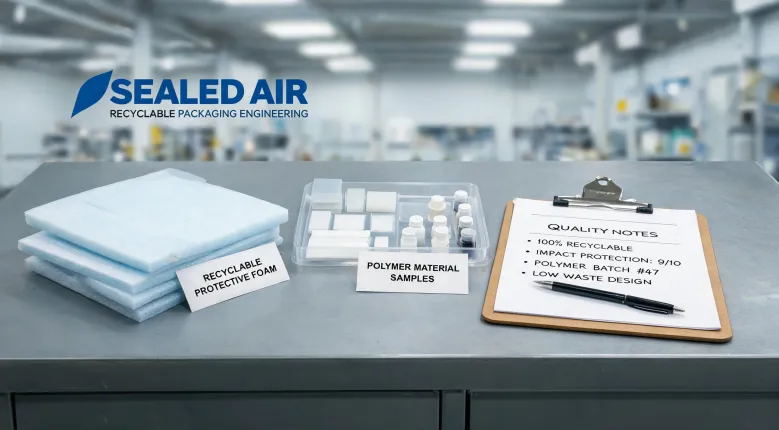
- Check the spec on Sealed Air's website. If you're considering a polyethylene foam liner, Sealed Air publishes dimensional and recyclability details for its Cell-Aire line on their official site. That takes about five minutes and saves you from a phone tag with a reseller.
- Use the Sealed Air sustainability report if you need to make a 'green' claim. The report lists certifications and recycling access. Don't guess whether a foam is recyclable—check the report.
- Understand the FTC rules. Per FTC Green Guides (ftc.gov), if you claim a package is recyclable, it should be recyclable in areas where at least 60% of households have access. That's not a marketing suggestion; it's a compliance thing.
- Remember the shipping constraints. If you're mailing a small part, USPS packaging dimensions matter. According to USPS pricing effective January 2025, a First-Class letter (1 oz) is $0.73 and a large envelope (1 oz) is $1.50. A thick padded pouch can push you into the large envelope rate, so plan your packaging dimensions with that in mind.
In March 2024, 36 hours before a trade show, a client realized their regular foam supplier couldn't deliver. We found a compatible Cell-Aire sheet from a distributor two towns away, paid $400 in rush freight—on top of the $1,200 base cost—and delivered to the venue at 10 p.m. the night before. The client's alternative was pulling the product from the show entirely. That sounds kind of extreme, but I've seen it happen more often than you'd think. That's also why I don't buy the old rule that 'you can't rush plastic properly.' You can, as long as you verify the material first.
In my experience, the 'local is always faster' thinking comes from an era before modern logistics. Today, a well-organized remote vendor can often beat a disorganized local one—even with freight. So don't assume the nearest warehouse is your only hope.
Scenario B: You're Repairing a Plastic Part With the Wrong Assumption
This one is less about shipping and more about manufacturing maintenance. A client once brought me a broken polyethylene part and said they'd fix it with a generic heat welder. When I asked whether the part was polypropylene, they looked at me like I'd just asked them to take a chemistry exam.
We ran a quick burn test. Sure enough—it was polypropylene (PP), not polyethylene (PE). The polyethylene plastic welder they owned would have produced a brittle, useless joint. That's a classic emergency that could've been a very expensive mistake.
So, to answer the question that a surprising number of people ask: is polypropylene plastic? Yes—polypropylene is a thermoplastic polymer, and it's one of the most common plastics in packaging, furniture, and even plastic tumblers. But it's chemically different from polyethylene.
If you're using a dedicated polyethylene plastic welder, you need to know the base material of the part you're repairing. Here's how to confirm:
- Look for the resin identification code. PE is usually #2 or #4. PP is #5. You'll often find a chasing arrow with the number.
- Do a water float test. Polyethylene (HDPE) usually sinks, while PP floats—but density can vary with additives, so use it as an indicator, not proof.
- Burn test (with care). PE drips and smells like candle wax. PP also drips but has a slightly different, more acrid odor. If you're not experienced, skip this and go straight to the resin code or a supplier test.
Had 2 hours to decide whether to weld or replace that broken part. Normally I'd spend more time getting the material test certified, but with the line manager waiting, I did the best I could with visual and float tests. In hindsight, I should have insisted on a burn test—it would've taken 30 seconds and saved us a week of rework.
Scenario C: You're Choosing Between Materials—Sustainability Isn't Binary
If you're buying plastic tumblers for a retail product, you're probably asking 'Is polypropylene plastic?'—yes, it is. But the better question is: 'Is it the right plastic for my product and my sustainability story?'
Polypropylene is used in a lot of reusable tumblers and food containers because it's BPA-free, dishwasher-safe, and reasonably impact-resistant. It's also pretty good at retaining heat in a double-wall design. But not all polypropylene is created equal—some grades are meant for injection molding, some for food contact, and some are not. Look for the specific grade before you order 10,000 units.
And here's a misconception I need to correct: the 'plastic is bad' thinking comes from an era before today's recycling infrastructure and material innovations. A well-designed polypropylene tumbler that gets reused hundreds of times can beat a single-use paper cup on energy and waste. Similarly, a recyclable polyethylene foam cushion can outperform a heavier paper insert when the whole lifecycle is counted.
If you need to verify a supplier's claim, go to the Sealed Air sustainability report on their website. It shows the recyclability status for their protective packaging lines. 'Recyclable' doesn't mean 'universally recycled.' FTC Green Guides are a good checkpoint here—a claim of recyclability should be geographically accurate.
How to Know Which Scenario You're In
Here's a simple way to decide:
- If you have a deadline and a packing list, and you're trying to ship a product without breakage—you're in Scenario A.
- If you have a broken plastic part and a welder on your workbench, and you're not sure if the materials match—you're in Scenario B.
- If you're specifying material for a consumer product like tumblers and someone in the room says 'is polypropylene plastic?'—you're in Scenario C.
Once you know your scenario, don't skip the verification step. In a rush, you might feel like you don't have time to check official sources. I've seen this pattern many times. But when I say 'many,' I do not mean a handful of hasty decisions—I mean consistently across 200+ orders. The fifteen minutes you spend confirming a resin type or a recyclability claim will save you from a $15,000 rework.
And if you need a starting point for packaging specs, Sealed Air's website has a product finder that filters by material, grade, and even sustainability certifications. Use it. That tool has cut our average search time from hours to minutes, and when you're up against a deadline, minutes are what matter.
When you're in a time pressure decision, go with a trustworthy vendor, but verify their claims just as fast. Find the spec sheet, pull up the sustainability report, or ask for a test sample. That's not slow. That's smart.

Jane Smith
I’m Jane Smith, a senior content writer with over 15 years of experience in the packaging and printing industry. I specialize in writing about the latest trends, technologies, and best practices in packaging design, sustainability, and printing techniques. My goal is to help businesses understand complex printing processes and design solutions that enhance both product packaging and brand visibility.
Leave a Reply