The 'Plastic-Free' Packaging Spec That Was Wrong for the Job
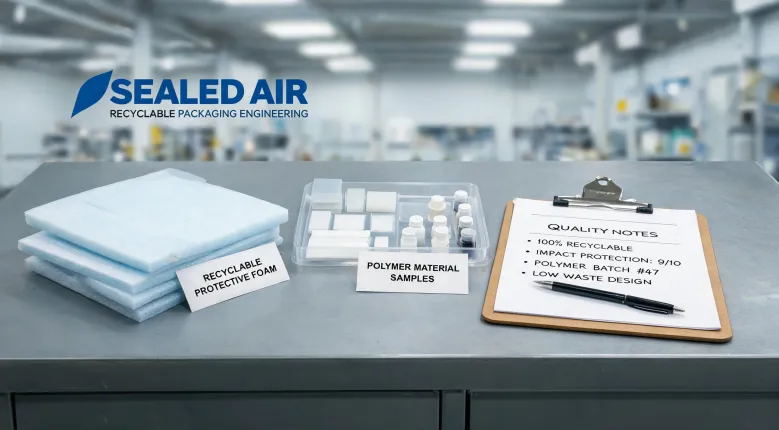
It arrived as a one-line requirement buried in a 14-page spec: "All packaging must be plastic-free." Sounded reasonable. Sounded green. It was also completely wrong for the product it was meant to protect.
How this landed on my desk
I'm the quality compliance manager for a custom packaging firm. I review every spec before it goes into production—roughly 320 unique deliverables a year. In 2024, I rejected about 6% of first articles due to tolerance or material issues. When a client sends a packaging requirement, it's my job to figure out whether it will survive contact with reality.
And theirs wouldn't.
The client makes precision flow meters—machined aluminum bodies, glass sight windows, tolerances within 0.002 inches. They're used in pharmaceutical manufacturing lines, so they're not cheap. A single unit sells for around $470. Their first order with us was 850 units. That's a $400,000 shipment that needed to cross the country twice: once from their factory to ours for packaging, once more to the end customer.
Their existing solution was a custom polyethylene insert that hugged the meter body and absorbed shock. It worked. The client told us so. But their largest retail channel partner had issued a sustainability mandate, and "no plastic" was now a contractual requirement.
The paper experiment
I don't need to tell packaging people that molded pulp is a good material. It's renewable, compostable, and for many products—electronics accessories, cosmetics, small parts—it's completely fine. (It also looks fantastic on packaging renders. As one of my colleagues said, "It photographs well.")
We ordered a custom pulp mold with a cavity matching the flow meter's geometry. Cost per piece: $2.30, delivered. The client's existing polyethylene insert: $0.55.
I flagged the cost difference in the review. The account manager pushed back, saying sustainability premiums are just part of doing business now. Fine. I approved the prototype.
Then we dropped it. Literally.
Drop tests don't care about your sustainability goals
We run ASTM D4169 drop tests for every protective packaging design that goes through our shop. Six units, a range of drop heights from 18 to 36 inches, several orientations. The protocol is the protocol; I implemented it in 2022 and I've never seen it lie.
The molded pulp versions failed five out of six tests.
One of the failures was a cracked sight window at 24 inches—the glass fractured clean through, despite the pulp mold being twice as thick as the polyethylene insert. The other failures were uneven corner impacts that creased the pulp and let the meter rattle loose.
The client's sustainability lead (I'll call her Priya) sat on the call in silence. Then she asked the question that changed the project: "So what actually works here that isn't greenwashing?"
That was the moment I searched "sealed air plastic free packaging."
What Sealed Air actually says about plastic-free packaging
Here's the thing I discovered. Go to the Sealed Air official website and look for "plastic free packaging." You don't find a plastic-free product. You find something better: a direct conversation about what "sustainable" means when your company's core business is polyethylene foam.
Sealed Air doesn't pretend to be plastic-free. They make recyclable versions of their polyolefin foams, like the Cell-Aire® product line, and they've invested in take-back programs that actually process the used foam. The claim isn't "this is plastic-free." It's "this is recyclable in practice, not just in theory."
Which, honestly, is a more honest pitch than most paper alternatives can make. A lot of paper packaging is coated or laminated, which makes it unrecyclable in real municipal facilities. The "paper turns to mush in the rain" thing is a separate issue. But the more I dug, the more this legacy assumption—"plastic is bad, paper is good"—looked like a relic of a 2010s marketing department, not a material science conclusion.
Our distributor confirmed the Cell-Aire® inserts met RoHS and REACH requirements, which mattered because the client ships into EU markets. Then they quoted us $0.62 per die-cut insert. The cost story became irrelevant. But I still had to convince Priya.
The head-to-head
I asked Priya to let us run the same six drop tests with the Cell-Aire® insert. Calmly, she agreed. Here are the numbers we sent her:
- Drop test pass rate: Polyethylene insert: 6/6. Molded pulp: 1/6.
- Moisture absorption after 72 hours at 90% RH: Pulp gained 14% by weight. Polyethylene gained 0.2%.
- Weight added to each shipment: Pulp: 0.8 lbs. Polyethylene: 0.3 lbs. Across 850 units, that's 425 extra pounds in transit.
- Cushioning coefficient at the critical load: The polyethylene foam absorbed shock roughly 3–4 times better per unit thickness. That's the physics; not my opinion.
I sent Priya the data table and asked one question: "What are we actually trying to optimize?"
She came back two days later with an answer I didn't expect. "The mandate was about waste. Not about materials. I should have pushed back on the wording earlier." She got internal approval to change their spec from "plastic-free" to "recyclable, with a documented take-back program." We shipped the first 850 units with recyclable polyethylene inserts in November.
What I learned about cutting foam (the hard way)
I need to talk about the best foam board cutter for a minute, because we burned a week prototyping with the wrong tool.
We needed custom-sized protective sheets for our own internal packaging, and I assumed a standard utility knife would work fine on the 1/4-inch polyethylene board. It didn't. The foam compressed instead of cutting; edges came out ragged and tapered. The test showed we might as well have torn it by hand. I learned my lesson and picked up a hot wire cutter. If you're working with polyethylene foam board—for inserts, foam board flooring underlayment, whatever—get a hot wire cutter with adjustable temperature control.
It costs around $350–$800 for a decent tabletop model (as of early 2025). It cut our prototype lead time in half. Our old method of scoring and snapping left edge finishes that I wouldn't sign off on. (And I sign off on everything that leaves our shop. So that mattered.)
The real lesson
From the outside, "plastic-free packaging" sounds like an unqualified good. The reality is more nuanced. What matters is whether the packaging protects the product, survives the journey, and has a real end-of-life pathway.
Looking back, I should have challenged the plastic-free spec on day one. At the time, I didn't want to look like an old-school materials guy fighting progress. Given what I knew then, my choice to let the test data speak was reasonable. But it cost us two weeks of cycle time and a lot of wasted prototype material.
I also stopped assuming "same specification" means anything. The client's words sounded like a clear requirement—"plastic free"—but the real problem they were solving was plastic in landfills. Different problem. Different solution.
Take this with a grain of salt: my experience with recyclable polyolefin film is specific to this product category. If your product is a consumer electronic that weighs 50 grams, molded pulp might be perfect—lighter, cheaper, protective enough. But if you're shipping something fragile and valuable, ask your material supplier for the cushioning curves. Or test it. Drop it. See what survives.
An informed customer asks better questions and makes faster decisions. The worst outcome isn't a customer who disagrees with you—it's one who asks for something that undermines their own goals.
Priya's team has now shipped three production cycles with our inserts. Their field damage rate dropped from 3.2% to 0.4%. And under their net-zero audit, the recyclable plastic solution scored better than the paper approach would have, because the paper product would have needed 2.5 times the weight and still failed protection standards.
If your own Google searches keep circling the "sealed air plastic free packaging" idea, I'd recommend going to Sealed Air's official website and reading what they say about recyclability and take-back programs. It's the same website. But the honest answer looks quite different from the one our clients typed into the search field. It's a better answer, too.
Plastic isn't the enemy. Waste is.

Jane Smith
I’m Jane Smith, a senior content writer with over 15 years of experience in the packaging and printing industry. I specialize in writing about the latest trends, technologies, and best practices in packaging design, sustainability, and printing techniques. My goal is to help businesses understand complex printing processes and design solutions that enhance both product packaging and brand visibility.
Leave a Reply