Protective Packaging in a Rush: Sealed Air, Bag Sealers, Foam Board, and ABS
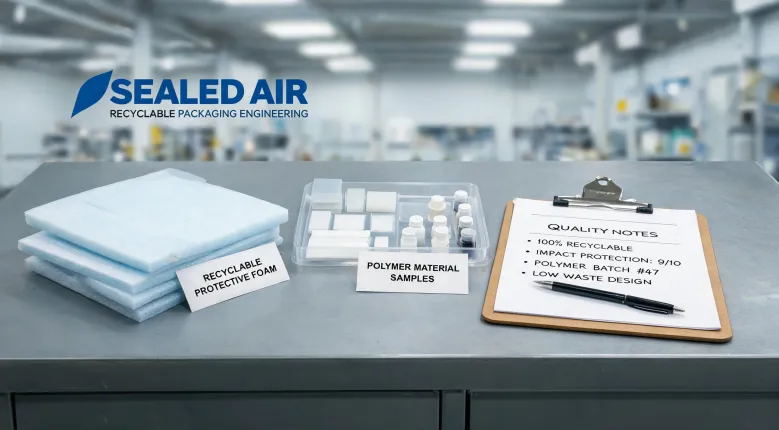
When a rush order lands on my desk, the first question isn't 'what's the prettiest packaging?' It's 'how much time do I have, and what's actually possible by then?'
The honest answer: it depends. There isn't one universal protective packaging material. There's only the right choice for your specific scenario.
Over the last eight years, I've coordinated 200+ rush packaging jobs—including same-day turnarounds for clients who thought they'd missed the window. In March 2024, a client called at 9:00 AM needing padded mailers for 300 units by noon. We made it. We made it because we stopped looking for a perfect all-purpose answer and started matching the material to the job.
Here are the three scenarios that show up in urgent jobs:
- You need to seal small parts into poly bags quickly.
- You need lightweight, rigid cushioning from compressed foam board.
- You need a custom rigid plastic enclosure, and you'll need to cut ABS plastic.
Let's go through each one.
Before We Start: The Blind Spot I See Every Time
Most buyers focus on per-unit material cost and completely miss setup time, tooling, scrap, and cleanup. Those extras can add 30–50% to the total bill. The question everyone asks is 'what's the price per square foot?' The question they should ask is 'what's the total cost, including cutting waste and rework?' A cheap sheet of foam that takes four hours to cut is not actually cheap.
Small order? That doesn't change the math. When I was starting out, the suppliers who took my $200 orders seriously are still the ones I use for $20,000 orders today. Small doesn't mean unimportant. It means potential.
And before you commit to a material, check the documentation. For regulated industries, confirm RoHS/REACH compliance. For recycled content claims, look at the Sealed Air website's product data. Many Sealed Air products carry declarations for both. Use them.
Scenario A: Sealing Small Parts in Poly Bags
If you're packing screws, circuit boards, cosmetic samples, or any SKU that needs to stay clean and dry, a plastic bag sealer is your best friend. It isn't glamorous. It's fast.
Actually, for most small-run jobs, I'd take a 12-inch impulse sealer over a fancy vacuum sealer. Why? Because it creates a reliable seal in under five seconds, and you can train someone in two minutes. That matters when a deadline is breathing down your neck.
The most frustrating part of bag sealing: operators pull the bag away before the seal cools. You'd think a five-second hold would be obvious, but when a rush order is behind, people skip it. Then the seal pops. Then you redo it.
So glad I tested the sealer on actual bags before production. Almost approved the setup without a pull test. That would have meant 1,000 pouches with weak seals.
What to Look for in a Plastic Bag Sealer
- Seal width: wider is better for heavy parts. A 2-3 mm seal works for light items, but heavy components need 5 mm or more.
- Heat control: some films need lower heat, especially if you're using recyclable polyethylene.
- Stand or table mount: if you're doing any volume, a foot switch frees up both hands.
If sustainability is a deciding factor, look for recyclable polyethylene bags and check the labeling. As of March 2025, the Sealed Air sustainability documentation covers many of their films and protective packaging materials. It lists certified recycled content for several products. Confirm the exact SKU before ordering.
Scenario B: Cushioning and Structure with Compressed Foam Board
When your product is heavy or fragile, foam peanuts aren't enough. Compressed foam board gives you two things at once: rigidity and shock absorption.
I'm talking about dense polyethylene foam board, not the soft squishy stuff. It holds a cut edge, resists crushing, and can be used for protective cases, shipping crates, dunnage, and reusable packaging. You'll often see a brand like CELL-AIRE from Sealed Air in this category.
For a rush job, the biggest trap is thinking you can cut everything with a box cutter and a straightedge. Sometimes you can. Other times, you'll create jagged edges and wasted material.
How to Cut Compressed Foam Board
- For board up to 1 inch thick, use a sharp utility knife and score the surface several times. Then snap it over a straight edge.
- For thicker board, use a hot wire cutter. Polyethylene cuts cleanly with heat, but work in a ventilated area and test on scrap first.
- For curved cutouts, a jigsaw with a fine-tooth blade works. Go slow; friction can melt the foam.
Dodged a bullet in July 2023 when I ordered pre-cut panels for a 48-sheet job instead of cutting them by hand. It was close: one more day and the customer's truck would've left without the order. The pre-cut cost a little more. It saved the entire schedule.
Need only a few sheets? Good suppliers won't turn up their nose. If a shop treats a 5-sheet order like a nuisance, that's a sign. Move on.
Scenario C: Cutting ABS Plastic for Rigid Enclosures
Sometimes foam isn't the right structural material. For durable enclosures, protective trays, or mounting plates, ABS plastic sheet is a solid choice. But cutting ABS can go wrong fast if you don't respect the material.
Here's how to cut ABS plastic without ruining your part:
- For thin sheet, under 1/8 inch, score and snap. Use a hook knife or plastic scoring tool, score both sides deeply, then snap over a sharp edge.
- For thicker sheet, use a table saw or circular saw with a fine-toothed carbide blade. Sharp blade, slow feed, and let the saw do the work. If you push too hard, the ABS melts.
- For curves and holes, a jigsaw with a bi-metal blade works. Support both sides of the cut so the plastic doesn't crack.
- Deburr every edge with a file or deburring tool. Sharp edges aren't just ugly; they're dangerous in packaging.
And a warning: don't laser-cut ABS. The fumes are hazardous. If a shop offers laser-cut ABS, run the other way. Trust me on this one.
The most frustrating part of working with ABS: if your blade is dull or too fast, the plastic melts and re-welds behind the blade. You'd think a saw is a saw, but that's the difference between a clean edge and a mess.
When I'm triaging a rush job with ABS, I ask one extra question: is a pre-cut or CNC-routed part available off the shelf? For standard sizes, it can be cheaper and faster than ordering sheet and cutting it yourself. That's especially true if you only need one or two pieces. Small quantities are not a sin.
How Do You Know Which Scenario You're In?
Before you order anything, ask yourself four questions:
- Is the item small, light, and dust-sensitive? If yes, poly bags and a sealer are your answer.
- Does it need shock protection, edge protection, or reusable cushioning? Then go with compressed foam board.
- Does the package have to hold its shape under load, or protect something heavier? That's ABS territory.
- Do you have less than 48 hours? If so, avoid custom fabrication unless you're certain the supplier has the exact material in stock.
If you're still unsure, start with the Sealed Air website and look at the product categories. But don't stop there. Call a supplier, tell them your timeline, and ask for a recommendation. A good one will walk you through the trade-offs. A great one will also tell you when you don't need their product.
And if your first order is tiny, don't apologize for it. You're doing exactly what smart buyers do: testing before scaling. A supplier that respects that gets your next order. The one that rolls its eyes doesn't.

Jane Smith
I’m Jane Smith, a senior content writer with over 15 years of experience in the packaging and printing industry. I specialize in writing about the latest trends, technologies, and best practices in packaging design, sustainability, and printing techniques. My goal is to help businesses understand complex printing processes and design solutions that enhance both product packaging and brand visibility.
Leave a Reply