PVC Board vs Foam Board: A Buyer’s Guide to Choosing the Right Material (With What I Learned From 40+ Orders)
PVC Board vs Foam Board: The Purchase Order Reality
When I first started handling material procurement for our company about three years ago, I assumed the heavier, denser option was always the better buy. You know, the logic that more material equals more value. That assumption cost me about $1,800 in over-specified materials before I figured out what I was actually doing wrong.
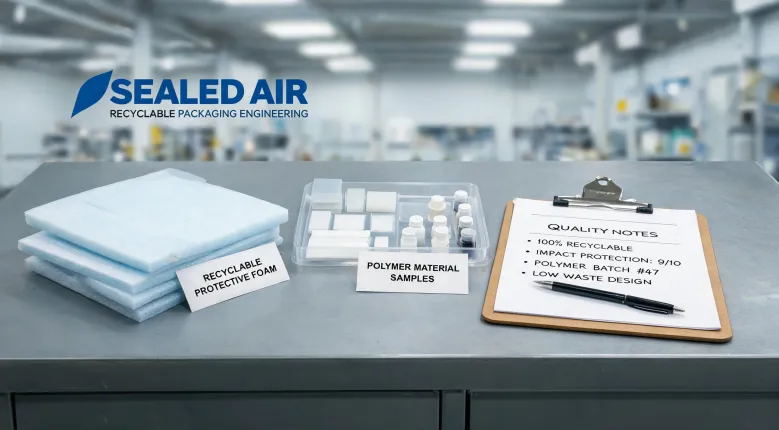
This comparison is specifically about polyvinyl chloride (PVC) board—often sold as Sintra or Komatex—versus polyethylene foam board—which includes products like Sealed Air's Cell-Aire or generic polyethylene foam. Both are plastic-based sheets, but they are not interchangeable. If you are ordering for packaging, signage, or structural inserts, this distinction matters.
Here is what I compare: durability, cost per square foot, weight and shipping cost, and ease of fabrication. These are the four dimensions that actually show up on a purchase order and in user feedback.
Durability and Structural Integrity: The Obvious Winner Isn't Always Right
PVC Board (Sintra/Komatex)
PVC board is rigid. It holds screws, resists bending, and stands up to repeated handling. If you are making permanent signage, display stands, or structural components, this is your material. I ordered a batch of PVC board for internal department signs in 2024—they came out clean, the corners remained sharp after six months of daily cleaning, and one dropped from a ladder onto concrete without cracking (surprise, surprise, it scratched but didn't break).
Industry standard color tolerance for printed PVC board is Delta E < 2 for brand-critical colors (Source: Pantone Color Matching System guidelines). This matters if you are color-matching a logo. PVC board takes digital printing and vinyl adhesion very well.
Polyethylene Foam Board (Cell-Aire)
Foam board is flexible. It will not hold a screw without tearing, it dents under pressure, and it degrades if left in direct sunlight for extended periods. But—and this is the key—it is also much more forgiving. I learned this the hard way when I specified PVC board for a protective packaging job (which honestly was overkill). The client needed cushioning, not rigidity.
The conclusion here was counterintuitive to me: For packaging applications, durability is not about hardness. It is about impact absorption. Polyethylene foam absorbs impact; PVC board transmits it. If the goal is to protect a fragile item, foam board wins. If the goal is to make a sign that lasts three years outdoors, PVC board wins.
“I can't tell you how many times I have seen a buyer specify PVC board for a packaging job because it 'feels stronger.' The material is stronger. The package is worse.”
— Feedback from a packaging engineer I work with
Cost per Sheet: The Price Tag That Misleads
PVC Board Pricing
A 4x8 foot sheet of 1/8-inch PVC board (white) runs about $65–$90 as of March 2025 (based on major supplier quotes I collected last month). Thicker boards scale quickly. A 1/4-inch sheet can be $110+. For a small buyer like me ordering 10–20 sheets per quarter, this adds up.
Polyethylene Foam Board Pricing
A 4x8 foot sheet of 1/8-inch polyethylene foam (like Cell-Aire) is about $25–$40. The same thickness, roughly half the cost. Foam board in 1/4-inch might run $45–$60. Significantly cheaper per square foot.
The catch? Foam board has lower tensile strength. If you need the sheet to support its own weight across a span (like an 8-foot long sign), it sags. I have seen this happen—our marketing team tried to use foam board for a large stand-up display, and it buckled at the center within a week. The PVC board would have cost about $70 more but lasted two years.
So the simple conclusion—'foam is cheaper”—is misleading. The question is: cheaper for what use case? For packaging inserts and temporary signs, yes. For permanent structures, no.
Weight and Shipping: The Hidden Cost of 'Heavy'
This dimension surprised me in practice. Everything I had read said heavier materials cost more to ship. In practice, the difference is larger than you expect because shipping carriers have dimensional weight pricing.
The Numbers
- A 4x8 sheet of 1/8-inch PVC board: approximately 12–15 lbs
- A 4x8 sheet of 1/8-inch polyethylene foam: approximately 3–5 lbs
If you are shipping a pallet of 20 sheets, that is about 240–300 lbs vs 60–100 lbs. With standard LTL freight pricing, the foam board will ship for 30–40% less, based on my actual freight invoices from Q4 2024. That vendor invoice line item for 'freight' is not small—I have been burned by underestimating shipping costs before.
The conclusion here is clear: For any application where distance or volume matters, foam board has a significant cost advantage in logistics. PVC board only makes sense if the material weight is negligible in the overall system (e.g., small signage being hand-carried).
Fabrication and Ease of Work: A Practical Difference
If you have a shop or a contractor doing fabrication, this is where the choice becomes personal. I watched our maintenance team try to cut both materials for a job last year.
PVC Board Fabrication
PVC board needs a saw. A table saw or a panel saw with a fine-tooth blade. You can score and snap thin sheets (1/8 inch), but it produces a rough edge. Routing and drilling are straightforward. Overall, fabrication is clean but professional equipment is needed. You will also generate pvc dust, which requires ventilation.
Polyethylene Foam Board Fabrication
Polyethylene foam can be cut with a utility knife and a straight edge. Clean cuts. No dust. You can die-cut it for custom shapes (common in packaging). It is genuinely easier for non-specialist users. Our team cut 40 sheets of foam board in one afternoon with a box cutter and a metal ruler. The PVC board for the same job required a full day and a borrowed table saw.
The conclusion from experience: If the end user is non-industrial (e.g., office staff setting up an event) or if speed matters, foam board wins. If you have a permanent fabrication shop, the difference is negligible—both are easy with the right tools.
So Which Should You Buy?
I can only speak to my context: buying for a mid-size B2B company with packaging, signage, and display needs across three locations. Your situation may differ. But here is how I make the decision now:
Choose PVC Board (or similar rigid plastic sheet) when:
- The piece needs to bear weight or resist bending over time
- It will be used outdoors or cleaned repeatedly
- Color matching and print quality are brand-critical (Delta E < 2)
- Fabrication is done in a shop with proper tools
Choose Polyethylene Foam Board (like Sealed Air's Cell-Aire or generic equivalents) when:
- Your primary need is cushioning and impact protection
- Weight and shipping cost are significant factors
- Fabrication will be done in-house with basic tools
- The application is temporary, indoor, or non-structural
A note on sustainability: Both materials can be recycled in principle, but local acceptance varies widely. Polyethylene (LDPE #4) has broader recycling streams in many US municipalities. PVC (#3) is restricted in some areas under RoHS and REACH compliance frameworks, particularly in Europe. Verify your local regulations before specifying large volumes (Source: industry compliance data, March 2025).
Honestly, I still get it wrong sometimes. Last month I ordered foam board for a product display when I should have used PVC. The display bent at the base. But that is how you learn—through the invoice and the fix.
Pricing as of March 2025; verify current rates with your suppliers.

Jane Smith
I’m Jane Smith, a senior content writer with over 15 years of experience in the packaging and printing industry. I specialize in writing about the latest trends, technologies, and best practices in packaging design, sustainability, and printing techniques. My goal is to help businesses understand complex printing processes and design solutions that enhance both product packaging and brand visibility.
Leave a Reply